Showing posts with label Diana Butler Bass. Show all posts

Saturday, October 20, 2012

Labyrinths

We've been discussing labyrinths on my Book Buddies blog, related to our reading of Diana Butler Bass's book on Christianity for the Rest of Us.  So two of us walked the labyrinth at St. Paul's Episcopal Church in downtown Chattanooga today.

The labyrinth was in a courtyard surrounded by the church's buildings, totally enclosed and yet outside.  We started at the "sunny" door (top photo), and this door was on a shady side.  Because the darker "guide lines" were faded, we each missed turns and had to retrace our steps.

The doors into the courtyard were locked, and the couple arriving when we drove up knew where to find someone to let us in.  While waiting for the key, we learned this labyrinth is based on the one inside Chartres Cathedral in France and the wife had been there.  Her access to that labyrinth was more difficult than our short wait, since chairs had been set up all over that one.  You can see the chairs in the photo are set up, but off the actual labyrinth.  This smaller one Donna and I walked today is patterned after the one at Chartres Cathedral.

As I started into the labyrinth, I noticed a feather.  When I passed Donna in an adjacent lane, I told her it was there.  When I came back around that area, I looked for the feather, but it was gone.  Looking across at Donna, I could see it in her hand.  (That white spot above her clasped hands is the feather's white tip.)  I spoke to her when I missed a turn, when I noticed she missed a turn, and probably several more times.  She said not a word, meditating as I should have been doing, if it weren't for all the opportunities to take these pictures for my blog.

As I approached her here, I noticed she was standing still, looking at the deep purple flowers beside the pink and white blossoms.  Just as I got there, I saw a bee fly away.  When we had lunch afterwards, Donna said the bee had an appetizer at one flower and went to another for his lunch.

As I walked, I was aware of splashing water off to the side.  When I had completed my walk back out of the labyrinth, I went to that wall and found a statue and water flowing over and dripping off all the leaves into the stones in the fountain below.  That's when I noticed names on the wall to the left of the fountain.

This had been the church of my neighbor and friend, so I went to read the names.  I heard the "sunny" door close behind me and realized Donna was probably cold and went inside the church when she completed her walk.  My friend Robin Holt died a year after my mother.

This handout from the labyrinth says in part:
"The labyrinth here at St. Paul's is a modified Classical Chartres design, similar to the one laid in the nave of Chartes Cathedral in France around 1220 AD. ... There is no right or wrong way to walk the labyrinth.  Walk with an open mind and an open heart and receive whatever is there for you. ... May God bless you on your journey."
Donna quietly and persistently went through the labyrinth; I was focused on what I'd write and what photos I'd post this evening.  She was "mindful" while I was "mind-full."  Guess who probably got the most out of it?  On the handout is the feather she carried through the labyrinth and then took home as a gift for her cat Sammy.

Monday, October 8, 2012

Changing the Apostles Creed

Okay, so my subject line was deliberately provocative, at least to those of you who know the creed by heart.  Recently, I read in one of my books (sorry, I forget which one) that The Apostles Creed skips the whole life of Jesus.  Look at these three "belief" sections:
I believe in God the Father Almighty,
maker of heaven and earth;

And [I believe] in Jesus Christ
his only Son our Lord:
who was conceived by the Holy Spirit,
born of the Virgin Mary,
suffered under Pontius Pilate,
was crucified, dead, and buried...

I believe in the Holy Spirit...
In the "belief" about Jesus, the creed goes straight from "born" to Pontius Pilate, who had him "crucified, dead, and buried."  Huh, it really does skip the whole life of Jesus.  Or rather, as I also read in that book, the whole life of Jesus was replaced by a comma.  I never noticed that.

But before I get to the "comma" (or life of Jesus), let's look first at that repeated word believe in the creed.  I've been doing a series of posts about Diana Bulter Bass, based on her book Christianity After Religion and her seminar at Sandy Springs Christian Church (Disciples of Christ) near Atlanta.  She points out that word meanings have changed over the years.  The ancient sense of the word believe was "trust" or "devotion" (p. 132).  So the creed might be better translated this way:
I trust in God the Father Almighty...
And [I trust] in Jesus Christ...
I trust in the Holy Spirit...
Here's a link to an interview with Diana Butler Bass where the interviewer says, "The re-languaging of the Apostles Creed as a prayer of personal devotion versus a symbolic recitation of doctrine was a revelation."

"Recitation of doctrine" was a problem for me in my 20s and 30s and 40s as I was struggling with answers to my doubts and questions.  I would recite SOME of the words boldly and then mumble or remain silent on some of the others.  I didn't know until this year that I wasn't the only one.  I read this in part of Rebecca's story (pp. 33-34) in Proverbs of Ashes by Rita Nakashima Brock and Rebecca Ann Parker (2001), one of the best books I've read this year:
My grandmother Ernst was full of life as well.  I remember being in church as a small child, standing next to her for the reciting of the Apostles' Creed.  My grandmother would begin, "I believe in God the Father, maker of heaven and earth, and in Jesus Christ," then she'd close her mouth until she joined in again on the last phrase, "I believe in the communion of saints."  As a child I was impressed that though she was the minister's wife, she didn't do what we were supposed to.  "Grandma," I asked one Sunday, "why don't you say 'conceived of the Virgin Mary, descended into hell, rose again from the dead'?"

"Well!" she said, with a bustle of impatience, "Because it doesn't make any sense."  My grandmother approached religion like hemming a skirt.  She taught me to make the stitches strong enough to be visible on the outside.  The lesson was clear.  "Don't believe anything unless you can see that it is stitched together welll"
Smart grandma.  I still have problems with the Apostles Creed, especially the fact that it replaces the whole life of Jesus with a comma.  (More on the "comma" in another post.)

Saturday, October 6, 2012

Invitation to discuss a book

I have planned a book discussion you can "attend" whenever it's convenient for you.  I have set up my Book Buddies blog for a discussion of this book:

Christianity for the Rest of Us: How the Neighborhood Church Is Transforming the Faith ~ by Diana Butler Bass, 2006
Read more about the book and the way we'll look at it by clicking on the title (or this link).
It's an ecumenical (interfaith) discussion, so you don't have to be Christian.  Nobody will be allowed to try to "convert" anyone -- or bully anyone.  I'm moderating the discussion, so I won't let that happen.  You don't even have to buy the book, but are welcome to share your opinion and answer any discussion questions (from the study guide) you like.  I've already posted the first few question.  We plan to talk about the book are we work our way through it, answering questions while a section is still fresh on our minds.  If you want to read our conversation without saying anything, that's okay, too.  Come take a look, okay?

Wednesday, October 3, 2012

Library Loot ~ October 3-9

Strength for the Journey: A Pilgrimage of Faith in Community ~ by Diana Butler Bass, forword by Phyllis Tickle, 2002
While many baby boomers left the church, only to come back later in life, Bass was a "stayer" who witnessed the struggles and changes and found much there that was meaningful. Offering thought-provoking portraits of eight parishes she attended over two decades, she explores the major issues that have confronted mainline denominations, congregations, and parishioners during those years— from debates over women clergy to conflicts about diversity and community to scrimmages between tradition and innovation.
Some of you know I attended a weekend seminar led by Diana Butler Bass and have been writing about it ever since.  I own three of her other books, but my library had this memoir, so I picked it up yesterday.  Her other three books are basically Christian history and where the church is headed, but this is earlier than those and may give me insight into how she understands the church.
  • 2002 ~ Strength for the Journey: A Pilgrimage of Faith in Community
  • 2006 ~ Christianity for the Rest of Us: How the Neighborhood Church Is Transforming the Faith
  • 2009 ~ A People's History of Christianity: The Other Side of the Story
  • 2012 ~ Christianity After Religion: The End of Church and the Birth of a New Spiritual Awakening
It looks promising.

Library Loot is a weekly event co-hosted by Claire @ The Captive Reader and Marg @ The Adventures of an Intrepid Reader that encourages bloggers to share titles of books they’ve checked out of the library.  To participate, just add your post to their Mister Linky any time during the week.  And of course check out what other participants are getting from their libraries this week

Wednesday, September 26, 2012

The Great Reversal

Signing her book for Donna


When I wrote about Christianity After Religion on Monday, I promised my next post would be about what Diana Butler Bass calls "The Great Reversal."  First, let me tell you that on pages 199-200, she quotes this YouTube video:


(If the video quits working, here's the link to the YouTube site.)

Using this same idea, Diana Butler Bass flips our usual way of talking about religion and spirituality on its head.
"For the last few centuries, Western Christianity ordered faith in a particular way.  Catholics and Protestants taught that belief came first, behavior came next, and finally belonging resulted, depending on how you answered the first two questions.  Churches turned this pattern into rituals of catechism, character formation, and confirmation. ... Believe, behave, belong.  It is almost second nature for Western people to read the religious script this way" (p. 201).
But that's not how it has always been.
"About five hundred years ago, Western Christianity divided from a single church into five different major church families:  Roman Catholicism, Lutheranism, Reformed Christianity, Anglicanism, and Anabaptist faith.  Each group felt the need to defend itself against all the others, making clear its interpretation of the Bible and theology" (p. 201).
Aha!  The emphasis shifted, and theologies had to be systematized.  They had to get the teachings straight.  They had to prove their beliefs were more biblical than the others.  They were wrestling with the ideas, the words, the beliefs.  And so that had to come first.

Now things are changing.  At the end of my last post, I wrote about our need for connection, for belonging:
The construction of selfhood has shifted from individualism to asking, Who are my friends?  It's about community.  So today we have social networking, not merely a tool but a way of life.  It's the place where community happens.  The need for connection is powerful, as shown by Twitter, Facebook, and all the rest of the social networks.
The Great Reversal turns things around.  We start with belonging, with our neighbors, with relationships, networks, and communities.  From there, we get to practices that draw participants into crafting a way of life and learning how to behave.  Out of belonging and behaving, we reach conviction and understandings of God through an encounter in the context of life experience — and reach believing.

Believing, Behaving, Belonging
is now
Belonging, Behaving, Believing.

It's reversed.  Instead of focusing of dogma, rules, and membership, the focus is on communities, practices as a way of life, and conviction based on life experience.  Or as she says,
"The current awakening is marked by its insistence on connection, networks, relationship, imagination, and story instead of dualism, individualism, autonomy, techniques, and rules" (p. 237).
So where will we find "communities of belonging" (p. 263)?  Maybe not in our churches, which are seen by many today as "museums of religion" (p. 258).  I don't have an answer, but I'm working on it.

How do I rate this book?  It's an excellent book, and I rate it 9/10.

Monday, September 24, 2012

Diana Butler Bass ~ Christianity After Religion


Diana Butler Bass used lots of visuals in her presentation a week ago.  Here, she is pointing to the screen.  She says "four shocks" contributed to our current climate of faith.
2001 ~ religion was associated with VIOLENCE after September 11th and the planes flying into the towers.

2002 ~ religion was associated with ABUSE after the Roman Catholic scandal.

2003 ~ religion was associated with INCIVILITY and EXCLUSION after mainline conflict about gays.

2004 ~ religion was associated with PARTISANSHIP after the evangelical entanglement with politics.
In other words, religion didn't look so good any more, and "unaffiliated" (with 4% atheist) became the fastest-growing group on polls of religious affiliation.  Add agnostics to those who are unaffiliated, and we have 9% who are out of religion.  When polls asked whether people are spiritual or religious (or both, or neither), two numbers had changed dramatically between 1999 and 2009:
  • Spiritual, but not religious = stayed the same, at 39%
  • Neither spiritual nor religions = stayed the same, at 9%
But the other two changed a lot:
  • Religious, but not spiritual = went down dramatically
  • Both spiritual and religious = went way up, by 50%
What do people mean by the words?
RELIGION:  "An institution that has organized matters pertaining to belief and that derives authority from external sources."
People used to talk about "organized religion," but now the word "organized" has been subsumed into "religion."  When we say "religion" these days, we mean what "organized religion" once meant.
SPIRITUAL:  "An experience that connects one with a deeper sense of self and the divine, wherein authority is validated through internal sources."
To sing "He Lives" ("he walks with me and he talks with me") is a form of testimony.  It is self-authenticating, something experienced within oneself.  And experiential religion means you "get it" inwardly.  Head knowledge becomes heart knowledge.

Diana Butler Bass refers to what she calls the THREE B's.  She suggests the kinds of questions a poll might ask to learn where a person stands in each category:
  • Believing (Understanding) ~ Do you believe God exists?
  • Behaving (Action) ~ Have you attended a religious service in the last week?
  • Belonging (Identity) ~ Are you Christian, Jew, Muslim, Buddhist?
But these categories can also be delineated as either religious questions or spiritual questions:
THE RELIGIOUS QUESTIONS

Believing:  What do I believe? ~ and we get Creeds and Dogma
Behaving:  How do I do that? ~ and we get Rules and Techniques
Belonging:  Who am I? ~ and we have Membership and Choices

THE SPIRITUAL QUESTIONS

Believing:  How do I believe that? ~ and we refer to Experience and Reason
Behaving:  What should I do now? ~ derived from Discernment and Purpose
Belonging:  Whose am I? ~ which is about Relationship and Community
The construction of selfhood has shifted from individualism to asking, Who are my friends?  It's about community.  So today we have social networking, not merely a tool but a way of life.  It's the place where community happens.  The need for connection is powerful, as shown by Twitter, Facebook, and all the rest of the social networks.

In my next post, I'll show you what she calls "The Great Reversal," when she turns all of this upside down.

Friday, September 21, 2012

Friday Five ~ blogging


Jan @ RevGalBlogPals brings us today's subject.  She said, "Blogging at Google's Blogger, I recently was boondoggled by the new designs of the site, which includes my blog. I felt like I had lost track of all the blogs I daily check so that I asked for help both at my blog and on Facebook! Still trying to learn these new ways of blogging, I am turning our minds to blogging for this Friday Five."

1. When did you start blogging? What/who prompted you?
My first post appeared January 30, 2007.  Two book buddies inspired me and invited me to try blogging myself, and both of them commented on my first post.

Stephanie @ Confessions of a Book-a-holic — Click to read her list of excellent children's and YA books.

Marg @ The Adventures of an Intrepid Reader — Click to read one of her posts about book blogging.
2. How often do you post?  How often do you visit blogging friends and/or other blogs?
Until recently, I usually posted every day and sometimes more than that.  Lately, I've been studying my books (as opposed to merely reading through them), and only some of my notes end up on my blog.  On the other hand, I have several blogs so I don't "inflict" all of my interests on any one group of folks.  I usually read (or at least glance over) whatever has been newly posted by the blogs listed on my sidebar as "Blogs I read" every day.
3. Why do you keep on blogging?
Under my profile picture on the sidebar, I say, "I read to explore ideas."  Reading and writing and discussing things is the way I learn and keep up with what interests me.  Blogging is my venue.
4. What do you like to write about?
Whatever I'm reading — or studying.  I like to share what I'm learning.  Over the weekend, I attended a seminar by Diana Butler Bass, so I'll be writing more about her ideas in the near future.
5. Have your blogging habits changed — or are they changing?
Recently, I have been more focused on books about an alternative or emerging Christianity that focuses on greater spiritual depth and actively meeting the needs of people.  That's why I've been doing more in-depth studying.  One really good book was Proverbs of Ashes: Violence, Redemptive Suffering, and the Search for What Saves Us (2001), which was written by Rita Nakashima Brock and Rebecca Ann Parker.  I wrote a bit about Rita's story and Rebecca's story.

Sunday, September 16, 2012

Sunday Salon ~ seminar by Diana Butler Bass

Diana Butler Bass, after yesterday's sessions
Diana Butler Bass led a weekend seminar about Christianity After Religion, her latest book.  In July, I discussed the book and Butler Bass's three B's:  believing, behaving, and belonging.
Believing ~ What do I think?
Behaving ~ How should I act?
Behaving ~ What do I do?
Belonging ~ Who am I?
My friend Donna and I attended all three sessions on Friday and Saturday and plan to hear Butler Bass again this morning as she teaches a Sunday school class and preaches a sermon at the church which hosted the seminar.  I have a lot to tell you about what I've learned.

BOOKS

One book arrived this week via UPS.
Why Did Jesus, Moses, the Buddha, and Mohammed Cross the Road?: Christian Identity in a Multi-Faith World ~ by Brian McLaren, 2012

When four religious leaders walk across the road, it's not the beginning of a joke.  It's the start of one of the most important conversations in today's world.  Can you be a committed Christian without having to condemn or convert people of other faiths?  Is it possible to affirm other religious traditions without watering down your own?  Brian McLaren proposes a new faith alternative, one built on "benevolence and solidarity rather than rivalry and hostility."  This way of being Christian is strong but doesn't strong-arm anyone, going beyond mere tolerance to vigorous hospitality toward, interest in, and collaboration with the other.  McLaren shows step-by-step how to reclaim this strong-benevolent faith, challenging us to stop creating barriers in the name of God and learn how affirming other religions can strengthen our commitment to our own.  And in doing so, he invites Christians to become more Christ-like than ever before.
One book arrived because Donna and I attended the author's seminar and bought it to get it signed.
Christianity for the Rest of Us: How the Neighborhood Church Is Transforming the Faith ~ by Diana Butler Bass, 2006

For decades the accepted wisdom has been that America's mainline Protestant churches are in decline, eclipsed by evangelical mega-churches.  Church and religion expert Diana Butler Bass wondered if this was true, and this book is the result of her extensive, three-year study of centrist and progressive churches across the country.  Her surprising findings reveal just the opposite — that many of the churches are flourishing, and they are doing so without resorting to mimicking the mega-church, evangelical style.  Butler Bass describes this phenomenon and offers a how-to approach for Protestants eager to remain faithful to their tradition while becoming a vital spiritual community.  As she delved into the rich spiritual life of various Episcopal, United Methodist, Disciples of Christ, Presbyterian, United Church of Christ, and Lutheran churches, certain consistent practices — such as hospitality, contemplation, diversity, justice, discernment, and worship — emerged as core expressions of congregations seeking to rediscover authentic Christian faith and witness today.  This hopeful book reveals the practical steps that leaders and laypeople alike are taking to proclaim an alternative message about an emerging Christianity that strives for greater spiritual depth and proactively engages the needs of the world.
What have you been reading?

Visit the Sunday Salon's Facebook page for links to more posts.

Sunday, July 22, 2012

Sunday Salon ~ adding more books

I'M A BOOKIE
I keep adding to my collection as I study the way Christianity is changing.  UPS delivered more books this week.

The Underground Church: Reclaiming the Subversive Way of Jesus ~ by Robin R. Meyers, 2012
Meyers proposes that the faithful recapture the spirit of the early church with its emphasis on what Christians do rather than what they believe.  The best way to recapture the spirit of the early Christian church, he says, is to recognize that Jesus-following was and must be again subversive in the best sense of the word because the gospel taken seriously turns the world upside down.  No matter how the church may organize itself or worship, the defining characteristic of the church of the future will be its Jesus-inspired countercultural witness.
  • Debunks commonly held beliefs about the early church and offers a vision for the future rooted in the past.
  • Proposes that the church of the future must leave doctrinal tribalism behind and seek a unity of mission instead
A Christianity Worth Believing: Hope-Filled, Open-Armed, Alive-and-Well Faith for the Left Out, Left Behind, and Let Down in Us All ~ by Doug Pagitt, 2008
This book weaves together theological reflections, Christian history, and Pagitt's own story of faith transformation.  He tells the story of his un-churched childhood, his life-altering conversion at age sixteen, his intense involvement in the church, and his growing sense of unease with the version of Christianity he was living.  Pagitt lays out his journey toward an authentic, passionate expression of a faith that feels alive, sustainable, and meaningful.
A People's History of Christianity: The Other Side of the Story ~ by Diana Butler Bass, 2009, religion
For too long, the history of Christianity has been told as the triumph of orthodox doctrine imposed through power and hierarchy. In A People's History of Christianity, historian and religion expert Diana Butler Bass reveals an alternate history that includes a deep social ethic and far-reaching inclusivity: "the other side of the story" is not a modern phenomenon, but has always been practiced within the church. Butler Bass persuasively argues that corrective—even subversive—beliefs and practices have always been hallmarks of Christianity and are necessary to nourish communities of faith.
The Great Emergence: How Christianity Is Changing and Why ~ by Phyllis Tickle, 2008, religion
Rooted in the observation that massive transitions in the church happen about every 500 years, Phyllis Tickle shows readers that we live in such a time right now. She compares the Great Emergence to other "Greats" in the history of Christianity, including the Great Transformation (when God walked among us), the time of Gregory the Great, the Great Schism, and the Great Reformation. Combining history, a look at the causes of social upheaval, and current events, The Great Emergence shows readers what the Great Emergence in church and culture is, how it came to be, and where it is going.
I'M A READER
The book I've been studying this week is borrowed, and I'm trying to finish it so I can return it to my friend Larry.
Amen: What Prayer Can Mean in a World Beyond Belief ~ by Gretta Vosper, 2012

I probably wouldn't have picked this book to read, a book about prayer.  The description has this sentence, though:  "Despite what it may have meant to previous generations, prayer now holds only a symbolic place in our busy lives and the deeper kinship with community is lost in the vestments of antiquated traditions."  In Amen, Gretta Vosper, United Church of Canada minister and author of the controversial bestseller With or Without God, offers us "a new tradition built on love and respect rather than on the rituals of ancient beliefs."  Parts of it have been interesting to read.
"Yet here we are, in our religious institutions, stuck trying to say new things with all the same old words" (p. 15).
That's why I bought  Speaking Christian: Why Christian Words Have Lost Their Meaning and Power — and How They Can Be Restored as I told you last Sunday.  It's by Marcus J. Borg, and I look forward to reading it.  I found some interesting things in it that have nothing to do with prayer, like this about a bumper sticker:

"Christian historian Diana Butler Bass ... drives a car with a 'Coexist' bumper sticker, each of the letters formed from the symbol of a different religion" (p. 27).  I have the same bumper sticker on my car.  This is what it looks like.
Can you name what these symbols represent?  The "+" at the end is a cross and represents Christianity.


Visit the Sunday Salon's Facebook page for links to more posts.

Sunday, July 8, 2012

Sunday Salon ~ books, blogging, and family

BOOKS
Three books arrived this week, one by UPS and two from the library.

The Future of Faith: The Rise and Fall of Belief and the Coming Age of the Spirit ~ by Harvey Cox, 2009
Cox explains why Christian beliefs and dogma are giving way to new grassroots movements rooted in social justice and spiritual experience.
So Far Away ~ by Meg Mitchell Moore, 2012, fiction
Thirteen-year-old Natalie Gallagher is trying to escape: from her parents' ugly divorce, and from the vicious cyber-bullying of her former best friend. Adrift, confused, she is a girl trying to find her way in a world that seems to either neglect or despise her. Her salvation arrives in an unlikely form: Bridget O'Connell, an Irish maid working for a wealthy Boston family. The catch? Bridget lives only in the pages of a dusty old 1920s diary Natalie unearthed in her mother's basement.
Ten Things Your Minister Wants to Tell You (But Can't, Because He Needs the Job) ~ by Oliver "Buzz" Thomas, 2007, religion, 9/10
Thomas cuts through all the agendas the Bible is used for today and finally says what many ministers are afraid to say.  How did it all begin?  Why are we here?  What is the Bible?  Is there really such a thing as a miracle?  How do I please God?  What about women?  What about homosexuality?  What about other faiths?  What happens after we die?  How will it all end?
BLOGGING

This blog has been different this week, as you may have noticed.  Rather than random books, I have focused my own personal study on a single book and have posted questions as I read:

Christianity After Religion: The End of Church and the Birth of a New Spiritual Awakening ~ by Diana Butler Bass, 2012
Believing:  What do I think?
Behaving:  How should I act?
Behaving:  What do I do?
Belonging:  Who am I?
I've also been reading a couple of other books:

Re-Claiming the Bible for a Non-Religious World by John Shelby Spong, 2011 ~ for the Seekers Sunday school class at St. Luke United Methodist Church.

Naked Spirituality: A Life with God in Twelve Simple Words ~ by Brian D. McLaren, 2011 ~ for the book study led by my friend Donna at Ashland Terrace Christian Church.
FAMILY

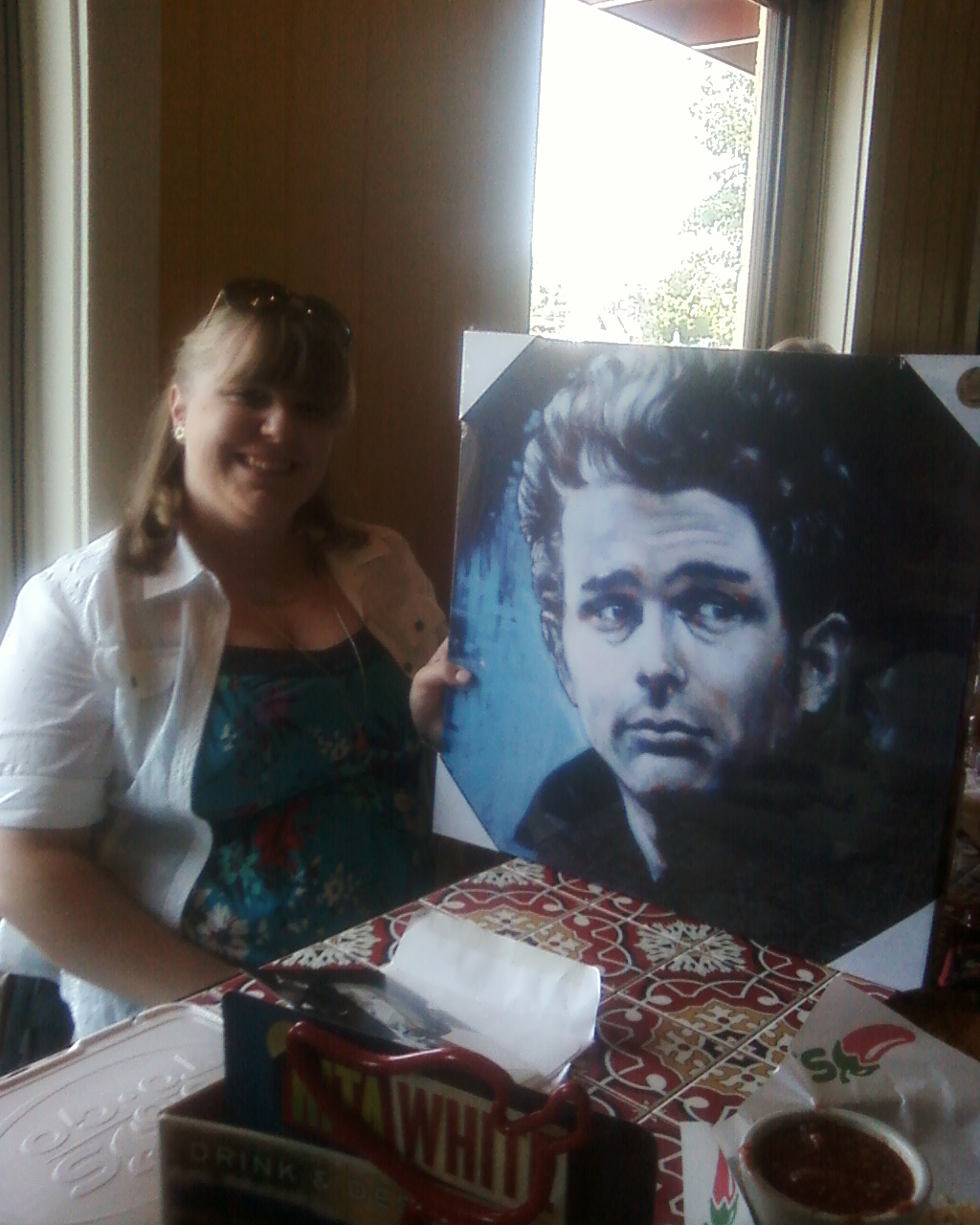
We celebrated my granddaughter Cali's 25th birthday at Chili's.  One of her best friends, who knows her well, gave her James Dean twice ~ on a birthday card and as a large portrait to hang on her wall.  Uh, can you tell she likes James Dean?

Meanwhile, at the other end of the long table, my great-granddaughter Raegan had the attention of her grandpa Pat (my son-in-law), showing him her princess dolls.

Visit the Sunday Salon's Facebook page for links to more posts.

Friday, July 6, 2012

Belonging ~ Who am I?

In her book Christianity After Religion (2012), Diana Butler Bass talks about belief, behavior, and belonging as "three intertwined strands of religious faith" (page 47), each asking a basic question.
Believing:  What do I think?
Behaving:  How should I act?
Belonging:  Who am I?
I recently shared some of what she said about believing, about behaving (and doing), and today I want to quote from her chapter on belonging.  If I ask you who you are, you will most likely give me your name.  This "me" named Bonnie has changed from time to time, like having to redefine myself when I became a wife and got a new last name, when I became a mother, when I divorced, when I got a job, when I changed jobs, when I moved far to another city where I had no family.  My life kept changing because I kept "going places" either mentally or physically.  Bass says,
"In this context of mobility, philosophers and theologians say that the most logical understanding of the self is that of a seeker, searcher, nomad, traveler, pilgrim, or tourist — identities of discovery and fuildity.  Who am I? has become the question Where am I?  I know that I am because that is where I was, this is where I am, and I am going somewhere else" (p, 177).
Years ago, a Roman Catholic friend was surprised when I told her the Bible was basically a family story, going from Abraham to Moses and Judah and King David and eventually Jesus.  Diana Butler Bass mentioned a specific aspect of the family in this chapter.
"...the Hebrew Bible is a sort of family spiritual pilgrimage memoir, a record of a communal journey to and from God and back again that reveals ever increasing faithfulness, deepening awareness of what it means to be a Jew, and a widening understanding of God and God's love and justice" (p. 179).
And the question becomes, Whose am I?  Because we are relational beings, we need connections and community.  As Bass says,
"Accordingly, our very existence is relational. ... The church is, therefore, not an institution, an organization, or a building, but a community of relationships where people's selves are with God and with one another, bound by love" (p. 195).
Believing, behaving, and belonging — but, according to the next chapter in the book, we've got the list backwards.

What about you?  To whom do you "belong"?  Who is part of your closest community?

Behaving ~ What do I do?

Diana Butler Bass talks of three intertwined strands of religion in her book Christianity After Religion.  I have written about Believing ~ What do I think? and Behaving:  How should I act? and have already mentioned that Jesus expected his followers to "do unto others" and "go and do likewise," but Bass says some people are combining religious practices.
"In the West, as religious institutions are struggling, people are ... 'doing it themselves,' as they pick up fragments of practice from various sources at hand and construct new sorts of Christianity, Judaism, Islam, and other religions" (p. 150).
Doing that can be problematical, however, and get pastors in trouble.
"A Missouri Synod Lutheran pastor was suspended for participating in a post-9/11 interfaith prayer service with 'pagan clerics.'  An Episcopal priest was prohibited from the priesthood for embracing Islamic spiritual practices.  And the consecration of an elected Episcopal bishop was disallowed (among other issues) because he engaged in Buddhist meditation" (p. 151).
So let me ask a few questions:  When was the last time you went to a service at a church or synagogue or mosque or temple?  Have you ever practiced a different religious tradition, maybe even combining it with your own?  Do you have a problem with interfaith prayer services, or do you "pray well with others"?

Wednesday, July 4, 2012

Behaving ~ How should I act?

In her book Christianity After Religion (2012), Diana Butler Bass talks about belief, behavior, and belonging as "three intertwined strands of religious faith" (page 47), each asking a basic question.
Believing:  What do I think?
Behaving:  How should I act?
Belonging:  Who am I?
I recently shared some of what she said about believing, and today I want to quote from her chapter on behaving.
Although Western Christianity would eventually be defined as a belief system about God, throughout its first five centuries people understood it primarily as spiritual practices that offered a meaningful way of life in this world — not as a neat set of doctrines, an esoteric belief, or the promise of heaven.  By practicing Jesus's teachings, followers of the way discovered that their lives were made better on a practical spiritual path.  Indeed, early Christianity was not called "Christianity" at all.  Rather, it was called "the Way," and its followers were called "the People of the Way."  Members of the community were not held accountable for their opinions about God or Jesus; rather, the community measured faithfulness by how well its members practiced loving God and neighbor.  Not offering hospitality was a much greater failure than not believing that Jesus was "truly God and truly human."  Early Christians judged ethical failings as the most serious breach of community, even as they accepted a significant amount of theological diversity in their midst.  (p. 149)
Her mother taught Diana the Golden Rule, when she was a young child:  "Do unto others as you would have them do unto you."  Even more, her mother taught by example, as in this story.
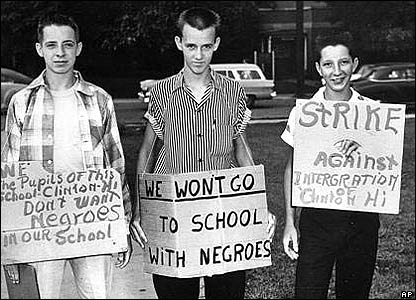
Later, she shared with me the story of the day her high school was desegrated in 1956.  Appalled by the court ruling opening white schools to African-American students, her friends arranged a student strike, refusing to attend school on the first day of integration.  They invited her to join in.  My mother, however, felt torn between her friends and what she knew to be right.  She always believed that racial prejudice was wrong.  Defying her friends, she went to school.  And she decided to meet the bus and greet her new classmates.

I asked, "Mom, why did you do that?"

She replied, "Well, I realized that if I were a stranger at a new school, I'd want someone to be at the bus to welcome me."

From that day on, "do unto others" was more than mother's moralism.  It was a heroic act of hospitality, one that echoed Jesus's own words, "I was a stranger and you welcomed me" (Matt. 25:35), and an action that I seek to imitate in my own life.

Most significant human learning happens through imitation, whether by story or observation.  (p. 156).
To be the best humans we possibly can be, we can intentionally choose to imitate Jesus and others on the path, or the Way.  Jesus said, "Go and do likewise" (Luke 10:37).


Monday, July 2, 2012

Believing ~ What do I think?

Diana Butler Bass says, "I am an author who explores the dimensions of religion and spirituality in today’s world.  I write books, columns, and blogs, all aimed to help people understand faith both analytically and personally."

In her book Christianity After Religion (2012), she talks about belief, behavior, and belonging as "three intertwined strands of religious faith" (p. 47), each asking a basic question.
Believing:  What do I think?
Behaving:  How should I act?
Belonging:  Who am I?
Today, I want to look at the first of these questions.  Bass says, "Baylor University researchers ... found that roughly 92 percent of Americans say they believe in God.  However, the Baylor team also discovered that Americans actually believed in four different Gods!  Not, however the Christian God, the Jewish God, the Muslim God, and everyone else's God.  Rather than dividing up according to religion, Baylor researchers discerned that Americans divide up according to how they perceive God's character" (p. 49).  She then lists these four as A-B-C-D, crediting Paul Froese and Christopher Bader, who wrote about America's Four Gods (2010):
Authoritarian God (31%), a wrathful sin-hating deity.

Benevolent God (23%), the forgiving friend of sinners, peacemaker, and caring healer.

Critical God (16%), the bringer of justice who will make all right at the end.

Distant God (24%), the cosmic creative force behind and beyond the natural universe.
Do you believe in God?  If so, do any of these categories resonate with you?

Sunday, July 1, 2012

Sunday Salon ~ books and church

READING LIST

Up next
Christianity After Religion: The End of Church and the Birth of a New Spiritual Awakening ~ by Diana Butler Bass, 2012, religion

Diana Butler Bass offers a fresh interpretation of the "spiritual but not religious" trend and seeks to comprehend the decline in Christian attendance and affiliation that started decades ago — and has increased exponentially in recent years.  Bass argues that we are at a critical stage in a completely new spiritual awakening, a vast interreligious progression toward individual and cultural transformation, and a wholly new kind of postreligious faith.
Reading now
Naked Spirituality: A Life with God in Twelve Simple Words ~ by Brian D. McLaren, 2011, religion
Just finished
Saving Jesus from the Church: How to Stop Worshiping Christ and Start Following Jesus ~ by Robin R. Meyers, 2009, religion, 10/10
CHURCH

This morning I attended church at St. Marks United Methodist Church, where two churches are trying something different.  The 4,200- member Christ UMC is sending a hundred of their members to work with St. Marks for a year.  This morning, the two groups (along with a few visitors like me) worshiped in the fellowship hall at St. Marks, with a band and videos as part of their worship.  Read more about it and see a two-minute video here.  Since Forrest Avenue UMC, where I was pastor from 1987 to 1991, was just down the street and closed two years ago, I would like to see St. Marks UMC continue as a community church.

Visit the Sunday Salon's Facebook page for links to more posts.