"How the heck do you meet all these authors? That's awesome!"

I've read several of his books, but don't have time right now to look up the titles for you. More later.
"How the heck do you meet all these authors? That's awesome!"

The tear runs like a river through a map, hurtling down toward his right shoulder, veering threateningly at his neck, then diverting south only to again pivot east at the fifth brass button of his captain's uniform. Below the tear, two more brass buttons and the clasp of his hands, and below all that, the military saber; the loosening creases on his pants; the shoes with their reflections of the snap of camera light. He is one of three in a sepia-colored portrait, and someone had to think to save his face. Someone had to put the photo back together — re-adhere the northeast quadrant of this map with three trapezoids of tape so that his left hand would fall again from his left elbow and he would still belong to us. We suppose he is the best man at a wedding. We suppose that it was eighty years ago, before the matanza, before he was jailed and then set free, before he saved the money to buy the land that became St. Anthony's Farm.

 Would the first few lines of your book make you want to read on? If you want to share the first lines of a book you are reading, click on the link and visit Katy at A Few More Pages. (Today's list.) Browse there to find interesting books for your own reading list. And don’t forget that Katy and all the contributors to this meme (including me) love comments.

Booking Through Thursday asks: "Of the books you own, what’s the biggest category/genre? Is this also the category that you actually read the most?"Most of the books I have at my house fall into two categories: (1) theological books, and (2) books about women. Yes, these are the books I actually read the most.
Theology: I have a Bachelor of Arts (BA) degree in philosophy and religion, a Master of Divinity (MDiv) degree in theology, and worked on a Doctor of Ministry (DMin) degree; I taught Religions of the World at Chattanooga State; I am an ordained United Methodist pastor, retired; and I have written a Bible study on Genesis: Soap Opera with a Twist. So theology and religion is my primary area of expertise.These two categories make up the majority of the books I own. Books I read to relax aren't necessarily ones I care to own, so usually they are borrowed from the library or traded at a used book store.
Women: Before that, I taught managers EEO compliance — specifically racism and sexism — and I am now writing a book about Women Unbound. That means I read lots of books about women, both fiction and nonfiction. So women and the issues we face is another of my areas of expertise.


In 1935, when Erma Morton, a beautiful young woman with a teaching degree, is charged with the murder of her father in a remote Virginia mountain community, the case becomes a cause célèbre for the national press. Eager for a case to replace the Lindbergh trial in the public’s imagination, the journalists descend on the mountain county intent on infusing their stories with quaint local color: horse-drawn buggies, rundown shacks, children in threadbare clothes. They need tales of rural poverty to give their Depression-era readers people whom they can feel superior to. The untruth of these cultural stereotypes did not deter the big-city reporters, but a local journalist, Carl Jennings, fresh out of college and covering his first major story, reports what he sees: an ordinary town and a defendant who is probably guilty.

Everyone in Dark Hollow, Tennesee, knew that old Nora Bonesteel had "the Sight." So naturally she was the first to know about the murder-suicide. Four members of the Underhill family lay dead on a run-down farm, and the two children who survived had no one left. Only the minister's wife, Laura Bruce, was willing to be their guardian.

Laura Foster, a simple country girl, was murdered and her lover Tom Dula was hanged for the crime. With the help of historians, lawyers, and researchers, McCrumb visited the actual sites, studied the legal evidence, and uncovered a missing piece of the story that will shock those who think they already know what happened. This book is an Okra Pick. Would anyone like to join me in reading some of the books on this Okra Pick list?

Ellie Calvin is caught in a dying marriage, and she knows this. With her beloved daughter away at college and a growing gap between her and her husband - between her reality and the woman she wants to be - she doesn't quite seem to fit into her own life. But everything changes after her controlling mother, Lillian, passes away. Ellie's world turns upside down when she sees her ex-boyfriend, Hutch, at her mother's funeral and learns that he is in charge of a documentary that involved Lillian before her death. He wants answers to questions that Ellie's not sure she can face, until, in the painful midst of going through her mother's things, she discovers a hidden diary - and a window onto stories buried long ago. This book is anther Okra Pick. If it sounds interesting to you, consider joining the Okra Picks challenge.


Despite their differences, Porky the messy pig and Bess the fussy cat are best friends and support each other in all their endeavors, from poetry writing to cake baking.

In rhyming verse with Mexican imagery and a Spanish refrain, a mother repeatedly says how much she loves her baby. (The only Spanish in the refrain is te amo, bebé, which mean "I love you, baby.")

Peony Pig wanted a rainbow of her very own, thinking that would make her famous. When she got one, all sorts of exciting adventures happen, but not what Peony had hoped for. The rainbow had ideas of its own.

Mother camel Gilda gives birth to a white Arabian horse, causing all sorts of consternation at the arrival of such a funny-looking "camel.'' The other camel riders laugh at little Abdul. By the end of the book, Gilda and her owner Feisel and baby Abdul are with another group of people who don't laugh at the horse, but at Gilda, thinking she's a funny-looking horse.

While a brother and sister, along with their grandmother, visit the National Gallery of Art, the balloon they were not allowed to bring into the museum floats around Washington, D.C., causing a series of mishaps at various tourist sites. Reviewed here.

In this wordless story a young girl and her grandmother view works inside The Metropolitan Museum of Art, while the balloon she has been forced to leave outside floats around New York City causing a series of mishaps that mirror scenes in the museum's artworks.

While a brother and sister, alopng with their grandparents, visit the Museum of Fine Arts, the balloon they were not allowed to bring into the museum floats around Boston, causing a series of mishaps at various tourist sites.

Mulligan, the bookstore cat, has an exciting day when a pigeon wanders into the store. The cat and the people in the bookstore had different agendas, obvious to everyone but Mulligan.

When Leora finds a chicken in her front yard, she imagines keeping it as a pet and gathering eggs for breakfast every morning. But her mother has a very different view. Following a Jewish law that says ”finders aren’t keepers,” Mrs. Bendosa is determined that the family should care for the chicken just until its rightful owner returns.
 Library Loot is a weekly meme co-hosted by Claire from The Captive Reader and Marg from The Adventures of an Intrepid Reader that encourages bloggers to share the books they’ve checked out from the library. If you would like to share a list of the loot you brought home from the library, Marg has the Mister Linky this week.

The Okra Picks challenge will run from November 15, 2011 through March 31, 2012, almost 20 weeks. When you read any of the twelve books (listed below), write a review to share your thoughts with the rest of us. Then click here and leave a comment with the link to the review (not your blog), and I'll post it in the list of reviews by each person.Sign Up:
You can join this challenge at any time. Just grab the Okra Picks logo above and write a post announcing your intention to participate in the challenge — you don’t need to pick specific books now. Once you have posted your Okra Picks challenge introductory post, leave your name on my Taking the Challenge blog, along with a link directly to your introductory post (not just to your blog’s home page). If you don’t have a blog, no problem — you can leave a comment there telling me you want to participate.
 The Ballad of Tom Dooley ~ by Sharyn McCrumb, 2011, fiction (North Carolina)
Laura Foster, a simple country girl, was murdered and her lover Tom Dula was hanged for the crime. With the help of historians, lawyers, and researchers, McCrumb visited the actual sites, studied the legal evidence, and uncovered a missing piece of the story that will shock those who think they already know what happened.

Lilyan Cameron joins Patriot Spies in British occupied Charlestown, SC, to rescue her brother from a notorious prison ship. She saves the life of one British officer and kills another to save her Cherokee friend. In escaping bounty hunters, she treks 200 miles of wilderness and very nearly loses everthing before finaly reuniting with her true love.
 Cold Glory ~ by B. Kent Anderson, 2011, fiction (Oklahoma)
When a page of a Civil War-era document is unearthed in Oklahoma, history professor Nick Journey is called in to evaluate the find — and is attacked by two men armed with Special Forces weapons. Federal agent Meg Tolman's investigation into Journey's attack uncovers more questions than answers, and she soon joins his quest to recover and protect the missing pages.
Ellie Calvin is caught in a dying marriage, and she knows it. Everything changes after her controlling mother, Lillian, passes away. At the funeral, she learns her ex-boyfriend is in charge of a documentary that involves Lillian. Ellie doesn't want to face the questions until, going through her mother's things, she discovers a hidden diary — and a window onto stories buried long ago.

Janisse Ray was a babe in arms when a boat of her father's construction cracked open and went down in the Altamaha River. Tucked in a life preserver, she washed onto a sandbar as the craft sank. Thus began a relationship with a mighty river that almost nobody knows. From childhood she dreamed of paddling its entire length to the sea.
 The Happy Table of Eugene Walker: Southern Spirits in Food and Drink ~ edited by Don Goodman and Thomas Head, 2011, cookbook
Eugene Walter (1921-98) was a pioneering food writer and a champion of southern foodways and culture. Read about vintage and artisanal drinks — from bourbon and juleps to champagne and punch — with a southern twist on America's culinary heritage. It includes more than 300 recipes featuring the use of spirits.
 Heart and Soul: The Story of America and African Americans ~ by Kadir Nelson, 2011, children's
Written in the voice of an unnamed narrator whose forebears came to this country on slave ships and who lived to cast her vote for the first African American president, this book touches on some of the great transformative events and small victories of that history. Nelson used his grandmother as inspiration for the narrator, according to this video, to show that African Americans helped our country achieve its promise of liberty and justice — the true heart and soul of this nation.
 The Hum and the Shiver ~ by Alex Bledsoe, 2011, fiction (Tennessee)
No one knows where the Tufa came from or how they ended up in the mountains of East Tennessee. Dark-haired, enigmatic, they live quietly in the hills and valleys, their origins lost to history. But clues are hidden in the songs passed down for generations. Private Bronwyn Hyatt, a true daughter of the Tufa, has returned from Iraq, wounded in body and spirit, but her troubles are far from over.
 Lions of the West: Heroes and Villains of the Westward Expansion ~ by Robert Morgan, 2011, history
Thomas Jefferson, a naturalist and visionary, dreamed that the U.S. would stretch across the continent. The account of how that dream became reality unfolds in the stories of Jefferson, Andrew Jackson, John “Johnny Appleseed” Chapman, David Crockett, Sam Houston, James K. Polk, Winfield Scott, Kit Carson, Nicholas Trist, and John Quincy Adams.
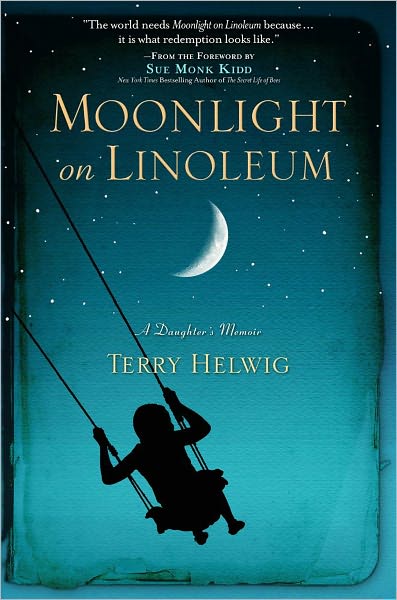
Because of their troubled and very young mother, Helwig had to become an early and faithful caretaker to her five siblings at a young age. Because of their stepfather’s roving job in the oil fields, they moved frequently from town to town in the American West. The girls were often separated and left behind with relatives and never knew what their unstable mother would do next.

Rash leads his readers on a Southern odyssey, full of a terse wit and a sense of the narrative so authentic it will dazzle you. As we wake inside these poems, we see rivers wild with trout, lightning storms, homemade churches, nailed and leaning against the side of a Tennessee mountain, a barn choked with curing tobacco, rockers that move over the same spot until they carve their names into the ground, deeper, even, into the roots where myths start, into the very marrow of the world.

From the bestselling, award-winning author of You Can't Drink All Day If You Don't Start in the Morning comes another collection of hilarious observations that are sure to resonate with women, mothers, and girlfriends everywhere. USA Today said, "Think Dave Barry from a female point-of-view."List of participants:
Thanks to Kathy of Bermudaonion’s Weblog, who hosted this challenge in 2010.
- Bonnie Jacobs @ Bonnie's Books
- You're next!
 |
| Reading 1-3 books makes you a GOOBER |
 |
| Reading 4-6 books makes you a TATER |
 |
| Reading 7-9 books makes you a PEACH |
 |
| Reading 10-12 books makes you OKRA, the quintessential Southern food, especially when fried. |

1 - Jay Gatsby, The Great Gatsby, F. Scott Fitzgerald, 1925Which of these have you read? Do these characters seem memorable to you?
2 - Holden Caulfield, The Catcher in the Rye, J.D. Salinger, 1951
3 - Humbert Humbert, Lolita, Vladimir Nabokov, 1955
4 - Leopold Bloom, Ulysses, James Joyce, 1922
5 - Rabbit Angstrom, Rabbit, Run, John Updike, 1960
6 - Sherlock Holmes, The Hound of the Baskervilles, Sir Arthur Conan Doyle, 1902
7 - Atticus Finch, To Kill A Mockingbird, Harper Lee, 1960
8 - Molly Bloom, Ulysses, James Joyce, 1922
9 - Stephen Dedalus, Portrait of the Artist as a Young Man, James Joyce, 1916
10 - Lily Bart, The House of Mirth, Edith Wharton, 1905
11- Holly Golightly, Breakfast at Tiffany's, Truman Capote, 1958
12 - Gregor Samsa, The Metamorphosis, Franz Kafka, 1915
13 - The Invisible Man, Invisible Man, Ralph Ellison, 1952
14 - Lolita, Lolita, Vladimir Nabokov, 1955
15 - Aureliano Buendia, One Hundred Years of Solitude, Gabriel Garcia Marquez, 1967
16 - Clarissa Dalloway, Mrs. Dalloway, Virginia Woolf, 1925
17 - Ignatius Reilly, A Confederacy of Dunces, John Kennedy Toole, 1980
18 - George Smiley, Tinker, Tailor, Soldier, Spy, John LeCarre, 1974
19 - Mrs. Ramsay, To the Lighthouse, Virginia Woolf, 1927
20 - Bigger Thomas, Native Son, Richard Wright, 1940
21 - Nick Adams, In Our Time, Ernest Hemingway, 1925
22 - Yossarian, Catch-22, Joseph Heller, 1961
23 - Scarlett O'Hara, Gone With the Wind, Margaret Mitchell, 1936
24 - Scout Finch, To Kill A Mockingbird, Harper Lee, 1960
25 - Philip Marlowe, The Big Sleep, Raymond Chandler, 1939
26 - Kurtz, Heart of Darkness, Joseph Conrad, 1902
27 - Stevens, The Remains of the Day, Kazuo Ishiguro, 1989
28 - Cosimo Piovasco di Rondo, The Baron in the Trees, Italo Calvino, 1957
29 -Winnie the Pooh, Winnie the Pooh, A.A. Milne, 1926
30 - Oskar Matzerath, The Tin Drum, Gunter Grass, 1959
31 - Hazel Motes, Wise Blood, Flannery O'Connor, 1952
32 - Alex Portnoy, Portnoy's Complaint, Philip Roth, 1969
33 - Binx Bolling, The Moviegoer, Walker Percy, 1961
34 - Sebastian Flyte, Brideshead Revisited, Evelyn Waugh, 1945
35 - Jeeves, My Man Jeeves, P.G. Wodehouse, 1919
36 - Eugene Henderson, Henderson the Rain King, Saul Bellow, 1959
37 - Marcel, Remembrance of Things Past, Marcel Proust, 1913-1927
38 - Toad, The Wind in the Willows, Kenneth Grahame, 1908
39 - The Cat in the Hat, Dr. Seuss, 1955
40 - Peter Pan, The Little White Bird, J.M. Barrie, 1902
41 - Augustus McCrae, Lonesome Dove, Larry McMurtry, 1985
42 - Sam Spade, The Maltese Falcon, Dashiell Hammett, 1930
43 - Judge Holden, Blood Meridian, Cormac McCarthy, 1985
44 - Willie Stark, All the King's Men, Robert Penn Warren, 1946
45 - Stephen Maturin, Master and Commander, Patrick O'Brian, 1969
46 - The Little Prince, Antoine de Saint-Exupery, 1943
47 - Santiago, The Old Man and the Sea, Ernest Hemingway, 1952
48 - Jean Brodie, The Prime of Miss Jean Brodie, Muriel Spark, 1961
49 - The Whiskey Priest, The Power and the Glory, Graham Greene, 1940
50 - Neddy Merrill, The Swimmer, John Cheever, 1964
51 - Sula Peace, Sula, Toni Morrison, 1973
52 - Meursault, The Stranger, Albert Camus, 1942
53 - Jake Barnes, The Sun Also Rises, Ernest Hemingway, 1926
54 - Phoebe Caulfield, The Catcher in the Rye, J.D. Salinger, 1951
55 - Janie Crawford, Their Eyes Were Watching God, Zora Neale Hurston, 1937
56 - Antonia Shimerda, My Antonia, Willa Cather, 1918
57 - Grendel, Grendel, John Gardner, 1971
58 - Gulley Jimson, The Horse's Mouth, Joyce Cary, 1944
59 - Big Brother, 1984, George Orwell, 1949
60 - Tom Ripley, The Talented Mr. Ripley, Patricia Highsmith, 1955
61 - Seymour Glass, Nine Stories, J.D. Salinger, 1953
62 - Dean Moriarty, On the Road, Jack Kerouac, 1957
63 - Charlotte, Charlotte's Web, E.B. White, 1952
64 - T.S. Garp, The World According to Garp, John Irving, 1978
65 - Nick and Nora Charles, The Thin Man, Dashiell Hammett, 1934
66 - James Bond, Casino Royale, Ian Fleming, 1953
67 - Mr. Bridge, Mrs. Bridge, Evan S. Connell, 1959
68 - Geoffrey Firmin, Under the Volcano, Malcolm Lowry, 1947
69 - Benjy, The Sound and the Fury, William Faulkner, 1929
70 - Charles Kinbote, Pale Fire, Vladimir Nabokov, 1962
71 - Mary Katherine Blackwood, We Have Always Lived in the Castle, Shirley Jackson, 1962
72 - Charles Ryder, Brideshead Revisited, Evelyn Waugh, 1945
73 - Claudine, Claudine at School, Colette, 1900
74 - Florentino Ariza, Love in the Time of Cholera, Gabriel Garcia Marquez, 1985
75 - George Follansbee Babbitt, Babbitt, Sinclair Lewis, 1922
76 - Christopher Tietjens, Parade's End, Ford Madox Ford, 1924-28
77 - Frankie Addams, The Member of the Wedding, Carson McCullers, 1946
78 - The Dog of Tears, Blindness, Jose Saramago, 1995
79 - Tarzan, Tarzan of the Apes, Edgar Rice Burroughs, 1914
80 - Nathan Zuckerman, My Life As a Man, Philip Roth, 1979
81 - Arthur "Boo" Radley, To Kill A Mockingbird, Harper Lee, 1960
82 - Henry Chinaski, Post Office, Charles Bukowski, 1971
83 - Joseph K, The Trial, Franz Kafka, 1925
84 - Yuri Zhivago, Dr. Zhivago, Boris Pasternak, 1957
85 - Harry Potter, Harry Potter and the Sorcerer's Stone, J.K. Rowling, 1998
86 - Hana, The English Patient, Michael Ondaatje, 1992
87 - Margaret Schlegel, Howards End, E.M. Forster, 1910
88 - Jim Dixon, Lucky Jim, Kingsley Amis, 1954
89 - Maurice Bendrix, The End of the Affair, Graham Greene, 1951
90 - Lennie Small, Of Mice and Men, John Steinbeck, 1937
91 - Mr. Biswas, A House for Mr. Biswas, V.S. Naipaul, 1961
92 - Alden Pyle, The Quiet American, Graham Greene, 1955
93 - Kimball "Kim" O'Hara, Kim, Rudyard Kipling, 1901
94 - Newland Archer, The Age of Innocence, Edith Wharton, 1920
95 - Clyde Griffiths, An American Tragedy, Theodore Dreiser, 1925
96 - Eeyore, Winnie the Pooh, A.A. Milne, 1926
97 - Quentin Compson, The Sound and the Fury, William Faulkner, 1929
98 - Charlie Marlow, Heart of Darkness, Joseph Conrad, 1902
99 - Celie, The Color Purple, Alice Walker, 1982
100 - Augie March, The Adventures of Augie March, Saul Bellow 1953


Appearing throughout this grand adventure are images of thirty-two Americans who have made important controbutions to our nation's history and culture. ... How many of these notable men and women can you find? (And don't peek at the answers in the back of the book until you've found them all!)I love this 36-page book! Rated: 10 of 10, couldn't put it down. (Still can't, as I keep going back over the pictures and finding more in it.)


