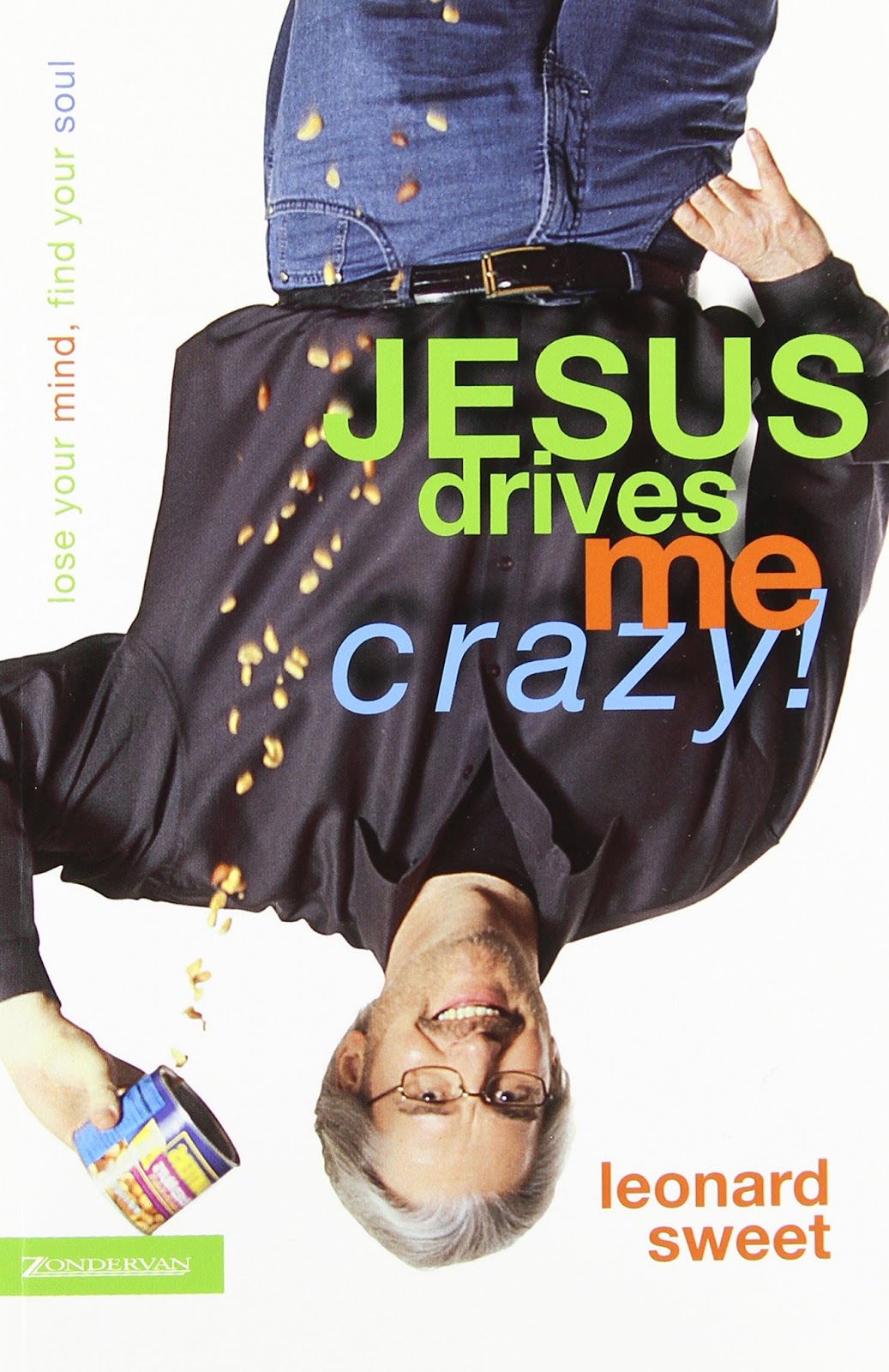
No, you're not losing your mind, and you're definitely not alone. Having a senior moment puts you in the company of Einstein, Lincoln, Beethoven, Newton, and an assortment of presidents, poets, philosophers, popes, and Nobel Prize-winners.
A child swipes her mother’s engagement ring, snatches her sister’s brand-new nightgown, and runs outside to play "bride." She soon loses the ring, rips the gown, and — when she gets caught — decides it’s time to pack her suitcase and make a run for it. When the policeman brings her home that night, her parents' reaction isn’t what she expected. In fact, they tell her to try living at some of her friends’ houses in their little St. Louis suburb, so she can find a better family. We watch Grace's soul-searching quest for belonging.


These stories feature characters battling daily demons of envy, fear, and disillusionment while somehow maintaining an abiding optimism. They are trying to weather the confounding people of the world — the chronically successful, the lucky in love, the athletically gifted — clinging to their cynicism while admitting that real hope and passion demand a suspension of skepticism.
A memoir by the cable television celebrity best known for his role as Harry Goldenblatt from "Sex and the City" documents his survival of a seemingly incurable form of leukemia, the life philosophy that has enabled his positive outlook, and his relationships with his friends and family.


Did you ever wonder where inventors get their ideas? Benjamin Franklin, one of the most famous inventors in American history, got most of his ideas — the good ones at any rate — from a mouse! Once you've met Amos the mouse, you'll always remember Benjamin Franklin a little differently than the history books do.
Besides never leaving the seat up or requiring valuable closet space, cats don't snore and they always think you look wonderful in the morning. They never complain about work or their boss, and they are very kissable — with no beard burn! These cartoons celebrate a relationship that's as close to purrfect as a girl can get.


As a child, Renne showed promise of becoming one of the world's greatest cellists. Now, years later, his life suddenly is altered by two events: he becomes a juror in a murder trial for the brutal killing of a Buddhist monk, and he takes on as a pupil a Korean boy whose brilliant musicianship reminds him of his own past.
Eva, a divorced and happily remarried mother of three, runs a small bookstore in a town north of San Francisco. When her second husband, John, is killed in a car accident, her family’s fragile peace is once again overtaken by loss. Emily, the eldest, must grapple with newfound independence and responsibility. Theo, the youngest, can only begin to fathom his father’s death. But for Daisy, the middle child, John’s absence opens up a world of bewilderment, exposing her at the onset of adolescence to the chaos and instability that hover just beyond the safety of parental love. In her sorrow, Daisy embarks on a harrowing sexual odyssey, a journey that will cast her even farther out onto the harsh promontory of adulthood and lost hope.


This is the story of Hanna Malter, a young girl growing up in 1950's Burgdorf, the small German town Ursula Hegi brought to life in her bestselling novel Stones from the River. Hanna's courageous voice evokes her unconventional mother, who swims during thunderstorms; the illegitimate son of an American GI, who learns from Hanna about his father; and the librarian, Trudi Montag, who lets Hanna see her hometown from a dwarf's extraordinary point of view.
A biography of the archetypal scientist traces Einstein'sadvances in thermodynamics and physics and offers a detailed appreciation of his profound influence on the direction of all subsequent scientific inquiry.


Bill Landsmann, an elderly Jewish refugee in a New Jersey suburb with a passion for travel, is obsessed with building his slide collection of images from the Bible that he finds scattered throughout the world. The novel begins when he crosses paths with his granddaughter's friend, Leora, and continues by moving forward through her life and backward through his, revealing the unexpected links between his family's past and her family's future.
Samantha Sweeting is a high powered corporate lawyer about to make partner. She should be on top of the world but instead her nearly 100 hour work week, equally driven (some would say obsessed) family and absolutely no social life is dragging her down. So when the blessed announcement arrives that she has her dream job and moments later Sam finds out she has made a major mistake that could cost a client millions she panics. And ends up in a house in the country applying for a job as a housekeeper. But Sam can't cook. Sam can't clean-and Sam has nowhere else to go


Clover is a 10-year old black girl from a small town in South Carolina. She is forced to forge a new relationship with the white stepmother she hardly knows, when her father dies only hours after marrying the woman.
In the fall of 1988, Sue Miller found herself caring for her father as he slipped into the grasp of Alzheimer's disease. Before retirement, James Nichols had been a professor at Princeton Theological Seminary and a fourth-generation minister. She recalls the bitter irony of watching him, a church historian, wrestle with a disease that inexorably lays waste to notions of time, history, and meaning.


The popular actor looks back to reassess the meaning of his own life and the paths he has taken, from the turbulent 1960s to the tragedy of September 11, and to answer such questions as "What do I value?" and "What, exactly, is the good life?"
Benjamin Dickinson Carr is more than just an average sixth-grader. He has a sky-high I.Q., a knack for all kinds of science and most of all, he has George. George is a little being who lives inside Ben and who's always been good company — that is, until now. When George warns Ben that his former lab partner, William, is up to no good, Ben refuses to listen, and George stops speaking to Ben.


Examines the functioning of the brain and recommends mental exercises that are designed to improve thinking, develop intuition, and increase brain capacity.
Sara inadvertently helps a conman abscond with the funds to buy books for the school library. Sara comes up with an idea — to get Jasper Dale, the reclusive inventor, to help put up a magic lantern show in a bid to raise funds for the school library. Sara also attempts to get a donation from a wealthy businessman who is wary of people asking him for money.


A woman in her forties is a victim of a suicide bombing at a Jerusalem market. Her body lies unidentified in a hospital morgue. She had apparently worked as a cleaning woman at a bakery, but there is no record of her employment. When a Jerusalem daily accuses the bakery of "gross negligence and inhumanity toward an employee," the bakery’s owner, overwhelmed by guilt, entrusts the task of figuring out who she was, and burying her, to a human resources man. Facts of the woman’s life take shape — she was an engineer from the former Soviet Union and a non-Jew on a religious pilgrimage to Jerusalem.
Shannon Ravenel has chosen fifteen very contemporary stories, not one of which conforms to old-time standards. No hoop shirts, no mint juleps here.


People who think for themselves, change the world. Author Sid Roth was instructed in a dream to find and interview people who had broken through the mold of their previous experiences to achieve their destiny. He interviewed an atheist, a holocaust survivor, a multi-millionaire, a media executive, and a Ph.D. They all thought for themselves, and everything in their lives changed for the better.
"When I was little I would think of ways to kill my daddy." With that opening sentence we enter the childhood world of one of the most appealing young heroines in contemporary fiction. Her courage, her humor, and her wisdom are unforgettable as she tells her own story with stunning honesty and insight.


Kevin Pugh, 12-year-old couch potato, is looking forward to spending his summer doing as little as possible. But his dog Cromwell (part beagle, part potato chip dog) has suddenly and mysteriously developed a fascination with agility competitions: running up seesaws, leaping over hurdles, and soaring through hoops (sometimes). His dad wants him to go to football camp and does NOT think dog agility lessons constitutes a sport.
Jacob the Baker is a man whose humble life and profound wisdom are a source of both inspiration and reflection to those around him. Jacob is a poor but pious figure who rises anonymously before dawn to light the ovens in the town bakery. As the ovens are warming and the first dough rising Jacob turns inward, scribbling notes to himself. One of Jacob's carefully folded notes is accidentally baked into a loaf of bread. When it is discovered and read, its impact is overwhelming.


The Peanuts gang gathers around the tree (and the doghouse) to celebrate the holiday season with family and friends — and you, too!
Through the experiences of others, readers from all walks of life can learn the gift of love, the power of perseverance, the joy of parenting, and the vital energy of dreaming. Share the magic that will change forever how you look at yourself and the world around you.


Invites young children to practice calling 911 on a telephone keypad as they react to accidents, fires, and other emergencies. The plastic keypad moves, and it used to make a sound.
This story book has important lessons about growing up and about the emotional side of life. It includes discussion questions and activities. Children from 5 to 12 acquire important insights and learn to cope with many of life's stressing issues.I managed to stuff these 28 books into a plastic bag they provided on the last day of the Jewish Community Center's used book sale on Thursday. To clear the tables still full of donated books, shoppers can have all the books they can cram into those clear bags for a mere $5.00. Many book lovers bought several bags full.

Now, which book shall I read first? That one at the top (#1) makes me laugh, and I've already finished the 16 pages of #27, a children's book.
Word of the Day (in the title of this blog post)
bucks = Deerskins were once commonly used as a form of currency. In fact, one of the earliest known uses of the word is a trade record from 1748 that details the exchange rate for a cask of whiskey as "5 bucks" (deerskins). So "bucks" simply means a unit of money. If you say, "This book cost me five bucks” while you are in the United States, it means it cost you five dollars. Basically, if you replace the word "buck" with the name of the national currency, it means the same thing.