I never saw the Easter bunny, the tooth fairy, Santa Claus. Yes, it's a pattern. Hmm, what ELSE have they told me about that I've never seen? God and Jesus, that's who! So when will they tell me God isn't real either?
What do I want to know?
For starters, I always wanted to know WORDS. That is at the heart of what a wordsmith is, one who loves words, collects words, wants to understand words. My earliest full memory is about words, a story I've told many times, so you've probably already heard it.
I see my grandmother's chandelier beyond the head of my uncle (possibly Uncle Paul), who is looking down toward Nancy and me standing at his feet. He asks Nancy, "What grade are you in?" and she says, "First grade." That's all of the conversation I remember, but my perplexity rings clear in my memory. What were they talking about? How could she be in a "firstgrade" when I could clearly see she was in a room? What's a "firstgrade," anyhow? I didn't even understand our uncle's question, but Nancy knew and she answered him. EVERYBODY knew what the words meant . . . except me! I couldn't stand it! I wanted to know what all the words mean, all of them, every word in the world. Even Nancy, a little girl herself, knew what these words meant, and I didn't. It was so frustrating.
As an adult I pondered my memory of confusion and perplexity, realizing I must have been very, very young if Nancy was in the first grade. Nancy, after all, is four years older than I am. Let's see, she would be six years old in the first grade, making me . . . two?!? This means I struggled with words and trying to understand grown-up talk from the age of two? Wow! In later years I realized an uncle whose name I didn't know would probably be one who lived away from Chattanooga (my hometown). Many people were milling around in Grandma Reynolds's living room that day, meaning an uncle (one of her sons) was there for something big. A funeral? Probably, since Grandma died in early May 1943, and I remembered that uncle was wearing a dark suit. That means I had just turned three years old a week earlier, and Nancy was nearing the end of her first year in school.
What else did I want to know?
How about God-stuff? I started learning words, exploring ideas, thinking big thoughts, and going to church every time the door was open, it seemed, because Mother was very faithful. When I was little, she took me to HER Sunday school class because she was worried about leaving me in the nursery "alone," without her. When I was about eighteen months old, she later told me, she decided it was time to help me settle in with other children. So she explained to her Sunday school class that she would be in the nursery for the next few Sundays. When she opened the door to the nursery, she was surprised when I exclaimed, "Oh, Mother, boys and girls!" And I never looked back. She didn't miss a single Sunday in her own class and I was, finally, happily in my own!
My parents went to different churches. It was only after she married him that my mother found out Dad had been telling HIS mother he was going to dances when he was really going to church with my mother. Grandma Setliffe would have been upset to find out he was attending another church, so apparently dancing was more acceptable. Dad and his family went to Central Church of Christ when I was little, and Mother and her family went to East Lake Methodist Church. We were a divided family, but it almost wasn't that way at all.
One Sunday morning Mother attended church with Daddy, thinking a family should worship together. She had decided that, during the invitation, she would march down to the front and change her membership. That morning's sermon was about the First Baptist Church and, Mother later told me, Dad's preacher "preached them into Hell and not back out again." She said she could imagine it being the Methodists next week, and she just couldn't stand being in such a church. Dad went to his grave not knowing how close Mother came to joining his church. By then, he had joined HERS.
Anyway, I grew up attending two very different churches. By the time I was eight, I was ready to join the Methodist church. I don't remember what I made of their differences, but I had decided the Church of Christ was not for me. Mother thought I was too young at eight, and even at nine and ten. When I was ten-and-a-half, I told her one Sunday that I was going to go down front when the preacher gave the invitation, since she wouldn't talk to him about my desire to join. She gave in and told "Brother King" (Rev. John King) that I insisted on joining.
I remember my baptism. Methodists allow children to be baptized ("christened") as infants OR as a consenting believer, but my Daddy was firmly in the Church of Christ which insists on believer baptism by immersion only. So I was not baptized as a baby. Since Methodist churches rarely have baptismal pools for immersion, Brother King borrowed the one at the Baptist Church one afternoon. I was a skinny little kid at ten and couldn't have weighed much, but when my bare foot slipped . . . oh, my! I was sure I was going to drag poor, thin, elderly Brother King down with me! But no, he held on and didn't lose me and I went under the water.
How do I love God and other people?
The main thing I learned from my mother was that I was loved by her, by my father, by my aunts and uncles and cousins, by God. She sang "Jesus Loves Me" to us children, and I believed it because I felt loved. If God loves us, then we are supposed to love God and each other. That was clear to me. The next logical step is to figure out how to do that. How do I love God and other people?
When I was eleven, Mrs. Florine Morgan was my Sunday school teacher. One Sunday she told us that there were only three doctors in the whole of the Belgian Congo. Okay, so as an adult I can deduce what she REALLY said was there are only three Methodist missionary doctors in the Congo, but that's what I "heard" her say. I decided from that day that I should be a medical missionary to Africa.
When I went to college, I was working on a degree in pre-med so I could become a doctor and go to the Congo. Although I had a merit scholarship to Emory University, I chose to attend in my hometown (the University of Chattanooga, later the University of Tennessee at Chattanooga) because Clyde said "if I love him" I wouldn't go so far away. And he told me he would go to Africa with me as a missionary. He even changed his major to facilitate his being accepted, he said. He lied, and it was never changed. After we were married, I asked why he lied to me and he said, "I figured you'd outgrow these childish ideas."
Now what?
I spent the first year of marriage in tears, wondering how I'd gotten myself into this mess. After letting me use his car every workday while we were dating, Clyde refused to let me drive after we were married, not even on our honeymoon, saying, "Statistics show that wives are not good drivers." What?!? I tried to explain I was still the same person, to no avail. No job ("not MY wife," he said), no college ("women don't need higher education," he said), no books to read, no money to buy them anyway (the money he earned was HIS money), no car to go anywhere, just staring at four walls after I'd made the bed, and then waiting for him to come home.
In high school I had been in concert band, orchestra, and marching band, becoming Band Captain in my senior year. I got to go on all the band trips, including once to Washington, DC, where our band marched at half-time, seen on television across the nation. I played in the Youth Symphony, taught bassoon to a younger student, and played in the college band while still in high school. I was in the writer's club that met after school every week. I wrote a short story for an English class that my teacher had me read before a meeting of English teachers. I published poems and articles in school papers, took a required history class in summer school just so I could take all the electives I wanted to study during the year, and never saw the inside of our study hall until we were given an IQ test in my junior year in high school. I was either president or secretary or some position in every club I joined, and I was elected to the National Honor Society.
I had been into everything I could manage to find time for, so sitting at home doing nothing was absolute torture. It lasted less than two months. After getting married on February 28, 1959, I had had enough of staring at four walls by mid-April and got a job at Sears. My boss told me, months later, I had made the highest score ever recorded for Sears-Roebuck applications. Huh, so I did have a mind, but a mind that had been suddenly deprived of any stimulation whatsoever. The job lasted until the last day of that year because Sears (and most businesses, at that time) had a rule: No woman could work past the mid-term of her pregnancy. Yes, I made the classic mistake of thinking I could make the marriage better by having a baby. I now know more than I knew at age 18 when I got married or at age 19 when I got pregnant, but I'm glad I had my children when I was in my early twenties.
Numbers are also words
It's sad to waste a mind or, for that matter, to mind a waist. Oops! Here I am again, playing with words. Lest it appear I was all one-sided, I must say I have also loved numbers all my life. When I sat on Mother's lap while she looked through a magazine, I wanted her to read me the long number in ads for, say, tire mileage. When she read me nursery rhymes, I wanted her to read me the page numbers, too. I would tell Sassy, my aunt Lillian, that I loved her to the end of the line and then some! In other words, beyond how far I could count.
I remember I could count to twelve at age four because I learned to count the numbers around Mom's watch. And that reminds me of a story. In other words, this wordsmith also became a storyteller.
I needed a tonsillectomy, which Dr. Harold Starr would do in his office. Since they would be using ether on me, Mother explained they would have me smell some "perfume" and I should count all the numbers around her watch when they did. They started the procedure and put the ether mask over my face. Mother asked me to count the numbers, but I didn't. After a little bit, they removed the mask to see whether I was already asleep. I wasn't. They did it again, and I still refused to count. When I woke up after my tonsils were gone, Mother asked me, "Why wouldn't you count?" In great indignation I told her, "I didn't LIKE that ole PEW-fume!"
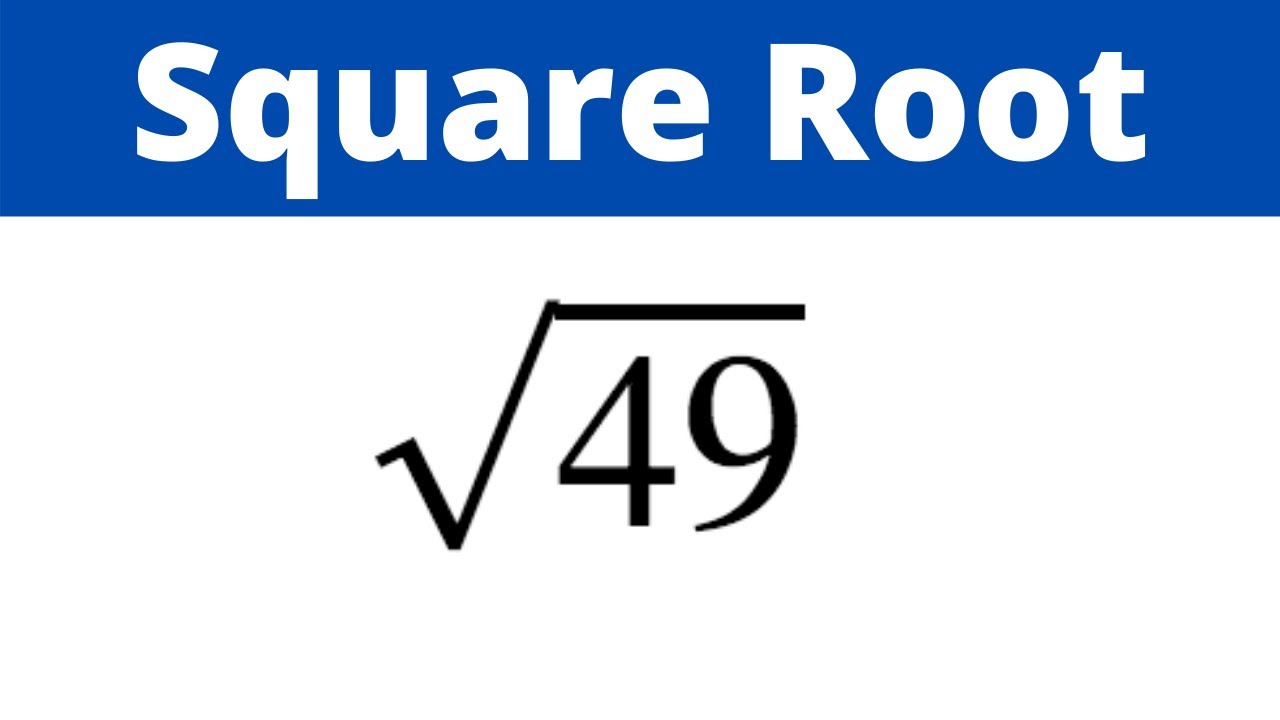
While taking a state exam during the sixth grade, I probably lowered my score because of my fascination about one particular question. Using a symbol I had never seen before, with a 49 inside it, the test gave me four answer choices:
(a) 5
(b) 6
(c) 7
(d) 8
Well, that was easy. The only one of those numbers that had anything to do with 49 would be a 7, of course. Also, that funny looking symbol seemed to be telling me the answer; it was shaped like a division sign but had a little thing like a 7 attached to the bottom left of it. I know now it was the "square root" sign. I had the right answer without ever having studied square roots.
That was probably the most fun I ever had on a test! But I devised other ways to have fun with boring tests. When we were tested on our assigned spelling words, maybe ten in all, I would wait until the teacher had called out more than half of them before starting to write. That way, I not only had to spell each word correctly, but I also had the challenge of getting the words in the right order!
In my ninth grade algebra class the teacher started explaining our homework, for the FIFTH time, because most of the students still didn't get it. I had "gotten it" the night before when I did my homework and was bored to tears. Miss Blackwell didn't change anything when telling them again, so why bother? Being among the tallest in my class, I was seated on the back row, and beside me was a bookshelf. Ah, yes, books. I found an interesting title, probably also math, and slid it off the shelf. Just as I started looking through the book, the teacher spotted me and called me down, even though nobody in the class was aware of what I was doing. So I was chastised for knowing algebra too well.
As a mother of elementary school children, I went back to college. So did a woman who lived about half a mile from me. We carpooled, so our children knew each other and were playing in her yard while I tried to help her grasp the concept of algebra.
4x = 16
X is the unknown.
That means 4 times "something unknown" = 16
so 4 times WHAT = 16?
About then our children ran past her back deck and Barbara, having heard my question, yelled, "FOUR!" as she disappeared around the house. I couldn't help but laugh because that's exactly what I would have done as a child. I don't know if Jeanette ever did learn algebra.
During my stay-at-home time, when the only books available to read were my college textbooks and his, I took down his trigonometry book and started going through it, page by page. In two days time I taught myself a third of his book. It was such fun! Clyde continued his college courses in night school. One night he was stumped by a calculus problem, and I looked over his shoulder, curious about it. I had never even had trigonometry, much less calculus, but after studying his figures and strange symbols I'd never seen before, I told him, "I can't explain HOW to fix your error, but it's right here in this section." When he reworked that part, he was able to solve the problem. I still don't know calculus, but I seem to have an affinity for numbers.
Most of my grandchildren could probably tell you "Grandma's favorite number" is nine. It's a magic number! Multiply 9 times anything, say 9x2. The answer is 18; now add those two digits: 1+8=9. Do it again: 9x4=36, and 3+6=9. This is fun! Again: 9x9=81, and 8+1=9. One day in the car I kept Cali entertained with this "numbers game" while we rode along, with her in the backseat and me driving. She wouldn't have been able to multiply this "big" number in her head, but it works as well: 106 x 9 = 954, and 9+5+4=18, and 1+8=9. There are other games we could play with nines, like adding up all the single digit numbers: 1+2+3+4+5+6+7+8+9+0=45, and 4+5=9. Okay, I'll stop now.
Do you know that feeling when you are working on a difficult problem and everything suddenly comes together? That's what I call an "aha!" moment, a time when everything is wonderfully and completely clear. The pieces have all fallen into place and you can see the big picture.
Writing is the process by which I synthesize what I am learning at the time. (Then I added: "to be continued" at the end.)


 There were contests at the camp, and every single camper won an Olympics-type medal for something. My 80-year-old mother was so proud of hers that she wore it for months afterwards, sitting in her recliner wearing the wide, red-white-and-blue ribbon around her neck, with her award dangling at the bottom of the V. She even wore it to church. And what contest did she win, you ask? The one for watermelon seed spitting! She managed to spit a watermelon seed farther than any of the others.