Showing posts with label John Dominic Crossan. Show all posts

Thursday, November 18, 2021

Nonfiction November ~ Week 3: Be the Expert

Week 3 of Nonfiction November (Nov. 15-19) – Be/Ask/Become the Expert with Veronica at The Thousand Book Project:  Three ways to join in this week:
  1. BE the expert = Share three or more books on a single topic that you have read and can recommend.
  2. ASK the expert = Put the call out for good nonfiction on a specific topic that you have been dying to read.
  3. BECOME the expert = Create your own list of books on a topic that you’d like to read.
I've decided to BE the expert on the subject of prayer, using three books from my bookshelves:


Crossan explores the prayer line by line that every Christian knows by heart, so we can rediscover why this seemingly simple prayer sparked a revolution.  Addressing issues of God’s will for us and our response, our responsibilities to one another and to the earth, and the theology of our daily bread, he reveals the universal significance of the only prayer Jesus ever taught.

A Place to Pray: Reflections on the Lord's Prayer ~ by Roberta C. Bondi, 1998, religion, 9/10

Bondi put this study together in a unique way, with each chapter written as a letter to her friend.  "As for us, ours is a God who loves, and if we love this God who is love, we long to express that love by imitating God, that is, by loving those whom God loves in the way God loves, in an appropriately human manner" (p. 128).  This prayer helps us to love God and to love our neighbors as ourselves.

Lord, Teach Us: The Lord's Prayer and the Christian Life
~ by William H. Willimon and Stanley Hauerwas, 1996, religion, 7/10

After a short introduction, the authors work through each phrase of the Lord's Prayer, using it as a framework for the Christian life.  Providing basic faith understanding, this book will help the user experience Christianity as attractive and inviting, not distant, difficult, or foreboding.  They apply this prayer to the whole Christian experience as life reflects these words.

Monday, October 28, 2019

Four favorites ~ meditating on a Monday

1.  My favorite view is either from Signal Mountain looking south across the Tennessee River and Chattanooga (above) or from Lookout Mountain looking north across the Tennessee River and Chattanooga (below).  Do you see a pattern here?  I first posted the photo below in 2013.

2.  My favorite comfort food is extra crispy fried okra.  Jeff at Shuford's BBQ knows I like it extra crispy and makes it perfectly.  When I visited Chattanooga in April, Sandra asked where I wanted to eat lunch on my birthday.  Not only did I get extra crispy okra, but Jeff also took me out to his van and gave me a Shuford's shirt like the one he was wearing.  If you are in Chattanooga, I highly recommend Shuford's BBQ, now located in the old Southern Restaurant building in Red Bank.


3.  My favorite genre of music is classical music, but my VERY favorite piece is Mozart's Bassoon Concerto.  I've posted it several times on this blog, and this is a good short version.  If the video doesn't work, here's the YouTube link.

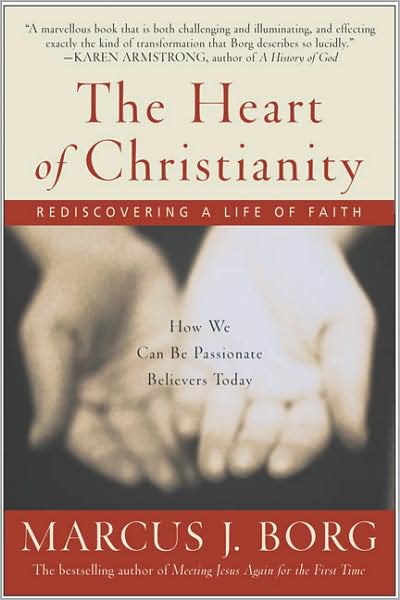
4.  My favorite theological writer is Marcus Borg, especially his The Heart of Christianity, published in 2003.  I reviewed this book ten years ago (click on the title for that blog post).  Borg, who died in 2015, often wrote with John Dominic Crossan, most of whose books are also on my shelves.  I still need to read The Search for Jesus: Modern Scholarship Looks at the Gospels (1994) by Borg, Crossan, and Stephen Patterson, that was edited by Hershel Shanks.  When I bought this book, years ago, I'd never heard of Patterson.  But now his 2018 book The Forgotten Creed: Christianity's Original Struggle against Bigotry, Slavery, and Sexism is on top of the stack beside my chair, waiting to be read.  Now both books are on the stack.

Sunday, April 22, 2012

Sunday Salon ~ more books?

READATHON

I've been taking part in Dewey's 24-hour Readathon, which started (for me) at 8:00 a.m. yesterday.  I ran out of steam and slept the last two hours this morning, as well as about an hour and a half in the middle when I dozed off.  I read one book and, if I hadn't spent so much time playing with the mini-challenges, I'd have finished it.  (I'm near the end, so I'll read the rest this morning before I sleep.)

BOOK SALE

It's not my fault the closest used book store is going out of business.  Though my goal is to clear my shelves by giving away books, I've been bringing some home, as well.  I bought some last week at 50% off, and again this week at 70% off — and the prices were already low, low, low used-book prices.  Okay, I'll brag a little and say I have given away more than I've replaced.  That ought to count for something.  Now to show you the bookstore booty, seven books for less than eight dollars.

The Girls from Ames: A Story of Women and a Forty-Year Friendship ~ by Jeffrey Zaslow, 2009
This book is a tribute to female friendships, the story of eleven girls and the ten women they became.  As children, they formed a special bond, growing up in the small town of Ames, Iowa.  As young women, they moved to eight different states, yet managed to maintain an extraordinary friendship that would carry them through college and careers, marriage and motherhood, dating and divorce, the death of a child, and the mysterious death of the eleventh member of their group.  The girls, now in their forties, have a lifetime of memories in common, some evocative of their generation and some that will resonate with any woman who has ever had a friend.  Close female relationships can shape every aspect of women's lives their sense of themselves, their choice of men, their need for validation, their relationships with their mothers, their dreams for their daughters and reveals how such friendships thrive, rewarding those who have committed to them.
After I brought these books home, I picked up the book I'd been reading (The Age of Grief by Jane Smiley) and noticed that the author "teaches at Iowa State University and lives in Ames, Iowa." I hadn't noticed "Ames" until then.  An interesting coincidence.

The Mother-Daughter Book Club ~ by Shireen Dodson, 1997
This is the story of a group of mothers and their daughters, and how their relationships were strengthened and changed by starting a monthly reading club.  But it is also a practical step-by-step guide — filled with stories, anecdotes, and reading lists — that will inspire parents to start reading clubs of their own.  It's about mothers and daughters, girls and women, and how reading and talking enriches our relationships with one another.
America's Women: Four Hundred Years of Dolls, Drudges, Helpmates, and Heroines ~ by Gail Collins, 2003, history
Gail Collins shows how women lived, what they cared about, and how they felt about marriage, sex, and work.  She begins with the lost colony of Roanoke and the early southern "tobacco brides" who came looking for a husband and sometimes — thanks to the stupendously high mortality rate — wound up marrying their way through three or four.  Spanning wars, the pioneering days, the fight for suffrage, the Depression, the era of Rosie the Riveter, the civil rights movement, and the feminist rebellion of the 1970s, Collins describes the way women's lives were altered by dress fashions, medical advances, rules of hygiene, social theories about sex and courtship, and the ever-changing attitudes toward education, work, and politics.  While keeping her eye on the big picture, Collins still notes that corsets and uncomfortable shoes mattered a lot, too.
The Book of Beginnings: The Story of Genesis and Job ~ by Steve Stephens, 1998, fiction
This artistic interpretation of the Book of Genesis follows the stories of Man, Woman, the Walker, the Land Baron, the Merchant, the Princess, the Schemer, the Dreamer, and other familiar biblical characters recast in simple, yet elegant, storybook prose.  Similar to Walter Wangerin's bestselling The Book of God, this book breathes new life into familiar Bible stories and characters.
Beyond Our Selves ~ by Catherine Marshall, 1961, religion
I read this book in the early 1960s, shortly after it was first published.  Now I want to see if it's still as meaningful to me now as it was then.  This week, I ran across this quote online:  "While Catherine Marshall is not on record as a universalist, she strongly hints at the idea in her book Beyond Our Selves in which she quotes Hannah Whitall Smith."  I'll look for any indications as I read the book again.
The Heart of Christianity: Rediscovering a Life of Faith ~ by Marcus J. Borg, 2003, religion
Here's another one I've already read, taught from repeatedly, and written about many times on this blog.  I want to give it to someone (who may read this and wonder if it's for her), and it was so very, very inexpensive — as well as clean and unmarked — that I really had to buy it.  You understand, don't you?  And besides, when I give it away, I'll be "cleaning off my shelves" as I intended to do this spring.  (Can you see my wicked grin?)
The Historical Jesus: The Life of a Mediterranean Jewish Peasant ~ by John Dominic Crossan, 1991, history
This book reveals the true Jesus who he was, what he did, what he said.  It opens with "The Gospel of Jesus," Crossan's studied determination of Jesus' actual words and actions stripped of any subsequent additions and placed in a capsule account of his life story.  The Jesus who emerges is a savvy and courageous Jewish Mediterranean peasant, a radical social revolutionary, with a rhapsodic vision of economic, political, and religious egalitarianism and a social program for creating it.
EARTH DAY

I took part in the very first Earth Day in 1970, my youngest grandchild was born on Earth Day in 2000 (happy birthday, Cady!), and I really like this famous Earth Day poster from 1971.

Visit the Sunday Salon's Facebook page for links to more posts.

Monday, March 26, 2012

The Last Week ~ by Borg and Crossan

The Last Week: What the Gospels Really Teach About Jesus's Final Days in Jerusalem ~ by Marcus J. Borg and John Dominic Crossan, 2006, religion, 9/10

No matter how many times I study a passage of scripture, I can always find something more in it.  If I look at it from a different angle, the light falls on something I didn't notice the last time.  If I approach it while dealing with something in my life or in the lives of people in my congregation, I see something new.  It happened again this month, as I took another look at the gospel of Mark, along with Borg and Crossan.  A few days ago, a discussion among preachers touched on themes in this book.  I loved the thinking in this exchange:
One said,
"Palm Sunday is April Fool's day this year.  Any thoughts on linking the two?  (Personally I'd love it if the full moon was a week earlier and Easter Sunday was April 1.)"
The other responded,
"I've been thinking along the same lines.  The Last Week by Borg and Crossan talks about the entrance of two different parades ... that might be a way into the connection."
Borg and Crossan discovered that many Christians are not clear about the details of events during the week leading up to Jesus's crucifixion, so they present a day-by-day account of Jesus's final week of life, with eight chapters for the eight days.  (Notice that this would fit nicely into a Lenten Bible study.)  They begin by differentiating between what we call "Passion Week" (a time of suffering) and what Jesus was passionate about — the kingdom of God.  Let's take a look the first two days.

PALM SUNDAY

On Palm Sunday, as Elaine mentioned, there were two entries into Jerusalem.  The triumphal entry of the Roman governor Pontius Pilate, riding on a horse and leading his soldiers into the city, symbolized the military strength of the empire.  The other entry was a peasant procession that Borg and Crossan suggest "looks like a planned political demonstration" (p. 4).  Pilate represented a domination system of political oppression, economic exploitation, and religious legitimation.  And Jewish leaders were on his side.
"What was new was that the temple was now at the center of local collaboration with Rome" (p.15).
The temple authorities raised tribute for Rome with an annual "temple tax."  They were supporting imperial violence and injustice.  And here we have a chance to mention April Fool's Day, as the first preacher above wants to do.  Jesus, riding his little donkey, was making fun of Pilate.  Making a fool of him.  Making an important point about the kingdom of God, that it was nonviolent.

And that leads us to Monday.  Remember the story about the money-changers in the temple?  Actually, they were in the courtyard of the temple.  Jesus took a look around the place on Sunday evening (according to Mark) and saved his second "demonstration" until morning.  But notice he did check it out.  He was preparing for the next day, just as he had lined up the donkey ahead of time.

MONDAY

Overturning the tables was planned, just as Jesus planned his entry into Jerusalem.  These were two demonstrations against the system.  Sunday, the anti-imperial entry into Jerusalem, and Monday, the symbolic destruction of the temple.
"What is involved for Jesus is an absolute criticism not only of violent domination, but of any religious collaboration with it" (p. 53).

"There was a terrible ambiguity in that the priest who represented the Jews before God on the Day of Atonement also represented them before Rome the rest of the year" (p. 41).
Borg and Crossan give compelling details that show how Mark carefully painted a picture of Jesus demonstrating against violence and injustice.  In the preface, they show how the word passion has come to mean the suffering of Jesus during Holy Week.  Yet the passion of Jesus, what he was passionate about, was the kingdom of God.
"The first passion of Jesus was the kingdom of God, namely, to incarnate the justice of God by demanding for all a fair share of a world belonging to and ruled by the covenantal God of Israel.  It was that first passion for God's distributive justice that led inevitably to the second passion by Pilate's punitive justice" (p. viii).
FRAMES

The authors point out how Mark used "frames" around scenes to make his points.  It was fascinating to me to see the stories of healing the blind before and after the disciples had totally misunderstood Jesus.  In other words, they were blind.  After reading this book, I can see that Mark was a much more sophisticated and nuanced writer than I had realized.  The careful placement of stories about blind men being healed, immediately before and after a story about the disciples' incomprehension, serves to emphasize that part of the story.  The point is made with the frames:  the Twelve just don't get it.  They can't see, and thus miss the point of what Jesus is trying to teach them.  This is a major point in the book:
"Notice, above all, how repeatedly Mark has Jesus insist that Peter, James, and John, the Twelve, and all his followers on the way from Caesarea Philippi to Jeusalem must pass with him through death to a resurrected life whose content and style was spelled out relentlessly against their refusals to accept it.  For Mark, it is about participation with Jesus and not substitution by Jesus" (p. 102).
That understanding is from the Wednesday chapter, but it is made even more explicit in the Friday chapter:
"Was Jesus guilty of advocating violent revolution against the empire and its local collaborators?  No. ... was Jesus guilty of nonviolent resistance to imperial Roman oppression and local Jewish collaboration?  Oh, yes.  Mark's story of Jesus's final week is a sequence of public demonstrations against and confrontations with the domination system.  And, as all know, it killed him" (p. 163).
Another quote, this time from the Easter Sunday chapter, points out how these authors understand the point Mark and the other gospel writers wanted to make:
"Good Friday and Easter, death and resurrection together, are a central image in the New Testament for the path to a transformed self.  The path involves dying to an old way of being and being reborn into a new way of being.  Good Friday and Easter are about this path, the path of dying and rising, of being born again" (p. 210).
And finally, using the gospel of John, the authors give their understanding of the claim that Jesus is the "only way."
"The Jesus of John's gospel speaks explicitly about being 'born again' (3:1-10).  In another passage, he says that unless a grain of wheat falls into the earth and dies, it cannot bear fruit (12:24).  He speaks of this way as 'the only way' (14:6) in a verse that has unfortunately often become a triumphalist claim justifying Christian exclusivism.  But within John's incarnational theology, the death and resurrection of Jesus incarnates the way of transformation.  This is what it means to say, 'Jesus is the only way.'  The path we see in him — dying and rising — is the path of personal transformation" (p. 211).
This review may seem to have little focus, hitting various points as it does.  But taken all together, the points Borg and Crossan make show what Mark was attempting to do in his narrative.  It may be a new way of seeing the story for you, not what you were expecting.  That's happened to Matthew and Luke, who used Mark's gospel as a basis for what they wrote, according to most scholars.  Borg and Crossan show where Matthew and Luke changed a thing or two, here and there, while writing their gospels, not aware of what Mark had been doing, like with his framing technique. (In the Monday chapter, page 33 has a chart of half a dozen stories Mark "framed" to make his point.)

I highly recommend this book and rate it 9 of 10, an excellent book.  I also reviewed it for RevGalBookPals today.

Saturday, March 3, 2012

A Century of Books ~ reading challenge

A reading project hosted by Simon T @ Stuck in a Book, in which we are to read and review a book published in every year of the Twentieth Century.  It started in January 2012, so I'm counting any books read after January 1st, even though I'm joining in March 2012.  I don't see any time limit, so I guess this goes for as long as it takes to fill in the list.

20th century ~ read so far:  18/100

1900 ~
1901 ~
1902 ~
1903 ~
1904 ~
1905 ~
1906 ~
1907 ~
1908 ~
1909 ~
1910 ~
1911 ~
1912 ~
1913 ~
1914 ~
1915 ~
1916 ~
1917 ~
1918 ~
1919 ~
1920 ~
1921 ~
1922 ~
1923 ~
1924 ~
1925 ~
1926 ~
1927 ~
1928 ~
1929 ~
1930 ~
1931 ~
1932 ~
1933 ~
1934 ~
1935 ~
1936 ~
1937 ~
1938 ~
1939 ~ Moses, Man of the Mountain ~ by Zora Neale Hurston, 1939, fiction (Egypt)
1940 ~
1941 ~
1942 ~
1943 ~
1944 ~
1945 ~
1946 ~
1947 ~
1948 ~
1949 ~
1950 ~
1951 ~
1952 ~
1953 ~
1954 ~
1955 ~
1956 ~
1957 ~
1958 ~
1959 ~
1960 ~
1961 ~
1962 ~
1963 ~
1964 ~
1965 ~
1966 ~
1967 ~
1968 ~
1969 ~
1970 ~
1971 ~ A Fragile Bark ~ by Joseph P. Benante, 1971, fiction (New Jersey), 8/10
1972 ~
1973 ~ A Proud Taste for Scarlet and Miniver ~ by E. L. Konigsburg, 1973, YA fiction, 9/10
1974 ~
1975 ~
1976 ~
1977 ~
1978 ~
1979 ~ Kindred ~ by Octavia E. Butler, 1979, fiction (Maryland), 9/10
1980 ~
1981 ~
1982 ~ Miss Rumphius ~ by Barbara Cooney, 1982, children's, 10/10
1983 ~
1984 ~ Nop's Trials ~ by Donald McCaig, 1984, fiction (Virginia), 9/10
1985 ~
1986 ~ Replay ~ by Ken Grimwood, 1986, fiction (Atlanta, Georgia),  10/10
1987 ~ The Age of Grief ~ by Jane Smiley, 1987, fiction, 7/10
1988 ~ Island Boy ~ by Barbara Cooney, 1988, children's, 8/10
1989 ~ Lon Po Po: A Red Riding Hood Story from China ~ by Ed Young, 1989, children's fairy tale (China), 8/10
1990 ~ Too Bad, Ahab: Naboth's Vineyard ~ by Marilyn Lashbrook, 1990, children's, 10/10
1991 ~
1992 ~
1993 ~ Whistling in the Dark: A Doubter's Dictionary ~ by Frederick Buechner, 1993, religion, 8/10
1994 ~ Ming: A Novel of Seventeenth-Century China ~ by Robert B. Oxnam, 1994, fiction (China), 8/10
1995 ~ One Hand Clapping: Zen Stories for All Ages ~ by Rafe Martin, illustrated by Junko Morimoto, 1995, YA religion, 9/10
1996 ~ Northwoods Cradle Song: From a Menominee Lullaby ~ by Doublas Wood, illustrated by Lisa Desimini, 1996, children's, 8/10
1997 ~ Jesus and Buddha: The Parallel Sayings ~ edited by Marcus Borg, 1997, religion, 7/10
1998 ~ The Gifts of the Jews: How a Tribe of Desert Nomads Changed  the Way Everyone Thinks and Feels ~ by Thomas Cahill, 1998, history (Middle East), 9/10
1999 ~ Little Bo: The Story of Bonnie Boadicea ~ by Julie Andrews Edwards, illustrated by Henry Cole, 1999, children's, 10/10

21st century ~ bonus books:  14/15

2000 ~ Seeker of Knowledge: The Man Who Deciphered Egyptian Hieroglyphs ~ by James Rumford, 2000, children's biography, 7/10
2001 ~ The Absolutely True Diary of a Part-Time Indian ~ by Sherman Alexie, 2001, YA fiction (Washington state), 9/10
2002 ~ Catalyst ~ by Laurie Halse Anderson, 2002, YA fiction, 9/10
2003 ~
2004 ~ The Lady and the Unicorn ~ by Tracy Chevalier, 2004, fiction (France and Belgium), 9/10
2005 ~ The Paper Bag Princess: The Story Behind the Story ~ by Robert Munsch and Michael Martchenko, 2005 (25th anniversary edition), 9/10
2006 ~ The Last Week: What the Gospels Really Teach About Jesus's Final Days in Jerusalem ~ by Marcus J. Borg and John Dominic Crossan, 2006,  religion, 9/10
2007 ~ Deadline ~ by Chris Crutcher, 2007, YA fiction (Idaho), 10/10
2008 ~ The Pajama Girls of Lambert Square ~ by Rosina Lippi, 2008, fiction (South Carolina), 8/10
2009 ~ Zeitoun ~ by Dave Eggers, 2009, history (Louisiana), 10/10
2010 ~ Ninth Ward ~ by Jewell Parker Rhodes, 2010, YA fiction (Louisiana), 9/10
2011 ~ Before I Go to Sleep ~ by S. J. Watson, 2011, fiction, 9/10
2012 ~ Lone Wolf ~ by Jodi Picoult, 2012, fiction, 10/10
2013 ~ Knocking on Heaven's Door: The Path to a Better Way of Death ~ by Katy Butler, 2013, memoir, 9/10
2014 ~ The Invention of Wings ~ by Sue Monk Kidd, 2014, fiction (South Carolina), 10/10

Thursday, March 24, 2011

Authors I've met

I'm adding Richard Peck to the list of authors I remember meeting:

Richard Peck
Masha Hamilton
Fannie Flagg
Laurie Halse Anderson
Madeleine L'Engle
E. L. Konigsburg
Robert Hicks
Christopher Paul Curtis
Avi
Susan Gregg Gilmore
Janisse Ray
Marcus J. Borg
John Dominic Crossan
Theda Perdue
Paul Von Ward

Monday, January 24, 2011

And there was light!


I normally read more than one book at a time.  For the last few days, my nonfiction has been The First Christmas by Marcus J. Borg and John Dominic Crossan (2007), and my fiction has been Hanna's Daughters by Marianne Fredrikkson (1994, English 1998).  They are completely different and I had no reason to expect any overlap, but I love it when something in one resonates with something in the other.  Here's what I read in The First Christmas:
It is not difficult to understand why the symbolism of light is a universal archetype.  We need only imagine how our ancestors experienced night and darkness.  This requires some effort, for we need to imagine a time before we learned how to illumine and domesticate the night with artificial light.  It was not so long ago.  Only recently have cities been illuminated at night; London was apparently the first, perhaps in the 1600s.  It became common in cities only after the invention of gas lighting in the late 1700s.  So also household lighting is recent.  According to an exhibit entitled "The History of Light" at the Rijksmuseum in Amsterdan a few years ago, ordinary people -- meaning the majority of the population -- could not afford candles until around the year 1800. When night fell, it was dark, very dark. Our ancestors knew darkness in a way that we do not.
Here's what I read in Hanna's Daughters:
What was most amazing of all, and they were to talk and laugh about it for many years to come, was the light. Fortunately it wasn't Hanna who made a fool of herself this time, but John.

"Getting dark, Mother. I'll run down and get the oil lamp."

"No," said Johanna.  "Look, all you do is this."  She flipped the switch on the wall inside the kitchen door, and the light flooded down on them.

Once Hanna recovered from her surprise, she was pleased Ragnar hadn't been there to see her standing with her mouth open.
The character Hanna lived from 1871 until 1964, so the time period was the mid-twentieth century in Sweden.  The author said the character "flipped the switch," but I remember turning on lights in old houses using push-button switches like this one. The button with white on it represents light, of course, and the black one means darkness or lights off.  The house I grew up in was built around 1920, I'd guess, and had this kind of switch.

We built a house on Signal Mountain in 1965, and for years we enjoyed dark nights with trees around us and multitudes of stars overhead. Then new neighbors built on the street behind us and installed a bright light at the end of their driveway.  The light shone directly into our bedroom and obliterated the night -- and the stars.  Thus endeth our stargazing with the children on blankets in our yard.

Do you have any stories about light?

Saturday, November 28, 2009

World Religion Challenge

Oh, my! I have gotten totally involved in the Women Unbound reading challenge, and now I've found another that grabs me. The World Religion Challenge, hosted by J. T. Oldfield (Bibliofreak), runs for the entire year 2010, from January 1st through December 31st.
1.  The Bare Bones Path
Read something about what are *technically* the only world religions:  Buddhism, Christianity, and Islam.  (These are considered, by some scholars, to be the only world religions because while Judaism and Hinduism have the numbers, they don't proselytize or really invite other people to join, making them more of an ethnicity.)
2.  The Penthouse Path
Read something about the five major world religions:  Hinduism, buddhism, Judaism, Christianity, and Islam.
3. The Universalist Path
Read something about all five of the major world religions PLUS more books about any or all of the following:  Shintoism, Animism, Taoism, Confucianism, Wicca, Mythology, Atheism, Occult, Tribal Religions, Voodoo, Unitarianism, Baha'i, Cults, Scientology, Mysticism, Rastafarianism, Jainism, Sikhism, Zoroastrianism, Agnosticism, Gnosticism, Satanism, Manichaeism, Deism, comparative Religion, Religious Philosophy, Jungianism, Symbolism, Church of the Flying Spaghetti Monster, etc.
4.  The Unshepherded Path
Read as many books as you would like about whatever religions you want.
===========================================================

I'm choosing the Unshepherded Path so I can read as many books of any religions as I choose.  J. T. Oldfield also calls this the "Don't Tell Me What to Do Path," which sounds totally appropriate to me.  Here are some books that are on my shelves that fit the criteria for this challenge (Eva and J.T. also have great lists of books):

Judaism
The Gifts of the Jews: How a Tribe of Desert Nomads Changed the Way Everyone Thinks and Feels ~ by Thomas Cahill, 1998
The Red Tent: A Novel ~ by Anita Diamant, 1997
The Woman Who Laughed at God: The Untold History of the Jewish People ~ by Jonathan Kirsch, 2001
The Triumph of Deborah: A Novel ~ by Eva Etzioni-Halevy, 2008
The Song of Hannah: A Novel ~ by Eva Etzioni-Halevy
The Garden of Ruth: A Novel ~ by Eva Etzioni-Halevy
Christianity
The Heart of Christianity: Rediscovering a Life of Faith ~ by Marcus J. Borg, 2003
The Jefferson Bible: The Life and Morals of Jesus of Nazareth ~ by Thomas Jefferson, 1989
The Bible: A Biography ~ by Karen Armstrong, 2007
God and Empire: Jesus Against Rome, Then and Now ~ by John Dominic Crossan, 2007
What Paul Really Said About Women ~ by John Temple Bristow, 1988
The Mythmaker: Paul and the Invention of Christianity ~ by Hyam Maccoby, 1986
The Metaphor of God Incarnate: Christology in a Pluralistic Age ~ by John Hick, 2005
The Grand Inquisitor ~ by Fyodor Dostoevsky, translated by Constance Garnett, 1956 (or the translation by David McDuff, 1993)
The First Coming: How the Kingdom of God Became Christianity ~ by Thomas Sheehan, 1986
Is Jesus God?: Finding Our Faith ~ by Michael Morwood, 2001
The Jesus Legend ~ by G. A. Wells, 1996
A World Full of Gods: The Strange Triumph of Christianity ~ by Keith Hopkins, 1999
Gnosticism
The Gospels of Mary: The Secret Tradition of Mary Magdalene, the Companion of Jesus ~ by Marvin Meyer
The Gospel of Judas ~ edited by Rodolphe Kasser, Marvin Meyer, and Gregor Wurst, 2006
The Complete Gospels ~ edited by Robert J. Miller, 1994
The Essence of the Gnostics ~ by Bernard Simon, 2004
Gnosticism: New Light on the Ancient Tradition of Inner Knowing ~ by Stephan A. Hoeller, 2002
Islam
Islam: A Concise Introduction ~ by Huston Smith, 2001
Hinduism
The Namesake: A Novel ~ by Jhumpa Lahiri, 2003 
Tribal Religions / Animism / Shamanism
Black Elk Speaks: Being the Life Story of a Holy Man of the Oglala Sioux ~ by Nicholas Black Elk, as told through John G. Neihardt, 1932, 2000
Atheism / Agnosticism
Humanism for Parents: Parenting without Religion ~ by Sean P. Curley, 2007
The God Delusion ~ by Richard Dawkins, 2006
The Portable Atheist: Essential Readings for the Nonbeliever ~ edited by Christopher Hitchens, 2007
Comparative Religion
The Great Transformation: The Beginning of our Religious Traditions~ by Karen Armstrong, 2006
People of the Book: A Novel ~ by Geraldine Brooks, 2008
Train to Pakistan: A Novel ~ by Khushwant Singh, 1956, 2007
The Battle for God: A History of Fundamentalism ~ by Karen Armstrong, 2000
Agape Love: A Tradition Found in Eight World Religions ~ by John Templeton, 1999
God Against the Gods: The History of the War Between Monotheism and Polytheism ~ by Jonathan Kirsch, 2004
Martyrs' Crossing: A Novel ~ by Amy Wilentz, 2001
The Rock: A Tale of Seventh-Century Jerusalem ~ by Kanan Makiya, 2001
We Just Want to Live Here: A Palestinian Teenager, An Israeli Teenager, An Unlikely Friendship ~ by Amal Rifa'i and Odelia Ainbinder, 2003
The Sea of Galilee Boat: A 2000 Year Old Discovery From the Sea of Legends ~ by Shelley Wachsmann, 2000 
Religious Philosophy
Re-Discovering the Sacred: Spirituality in America ~ by Phyllis A. Tickle, 1995
The Twentieth Century: A Theological Overview ~ edited by Gregory Baum, 1999
Tomorrow's God: Our Greatest Spiritual Challenge ~ by Neale Donald Walsch, 2004
After Heaven: Spirituality in America Since the 1950s ~ by Robert Wuthnow, 1998
Searching for God to Love ~ by Chris Blake, 2000
Science and Religion
How We Believe: The Search for God in an Age of Science ~ by Michael Shermer, 2000
God for the 21st Century ~ edited by Russell Stannard, 2000
The Hidden Face of God: How Science Reveals the Ultimate Truth ~ by Gerald L. Schroeder, 2001
Genesis and the Big Bang: The Discovery of Harmony Between Modern Science and the Bible ~ by Gerald L. Schroeder, 1990
Jungianism
The Portable Jung ~ edited by Joseph Campbell, translated by R. F. C. Hull, 1971
There Are No Accidents: Synchronicity and the Stories of Our Lives ~ by Robert H. Hopcke, 1997
Et cetera
The Church of Facebook: How the Hyperconnected Are Redefining Community ~ by Jesse Rice, 2009

Monday, September 21, 2009

The First Paul ~ Borg and Crossan, 2009

This past weekend I attended a series of lectures by John Dominic Crossan on "Paul and the Justice of Equality." Most of what he presented is in his latest book The First Paul, which he co-authored with Marcus J. Borg. What he said reinforced what I had read.

To begin with, Paul is a controversial figure whom some find appealing and others find appalling. I used to be in the latter camp, appalled by Paul's pronouncements on women, for one thing. Years ago, however, I learned that Paul is not responsible for much that was written in his name. It was a common practice in the first century CE (Common Era) to write what you might expect a person to say, if he were still around to do it. Thus, Paul didn't actually write about half the stuff with his name on it. In The First Paul, Borg and Crossan sort the New Testament epistles** attributed to Paul into three groups:
(1) 7 genuine letters ~ written by the radical Paul, himself
Romans
First Corinthians
Second Corinthians
First Thessalonians
Galatians
Philippians
Philemon
(2) 3 disputed letters ~ written by a conservative "Paul"
Ephesians
Colossians
Second Thessalonians
(3) 3 not written by Paul ~ written by a reactionary "Paul"
First Timothy
Second Timothy
Titus
This book is about the "first Paul" in the list above because he's really the only Paul. The authors call him the radical Paul because his ideas are as radical as those of Jesus. The conservative epistles were written later by others who wanted to bring Paul's ideas more in line with the way most people think. The third group, the reactionary epistles, reshaped Paul's ideas as the writers reacted by "correcting" Paul's meanings completely.

The authors call Paul radical in the subtitle: The First Paul: Reclaiming the Radical Visionary Behind the Church's Conservative Icon. What was so "radical" about Paul? What I quoted for last week's Teaser didn't sound at all radical. Their answer:
"Paul's message challenged the normalcy of civilization, then and now, with an alternative vision of how life on earth can and should be. The radical Paul, we are convinced, was a faithful follower of the radical Jesus" (p. 19).
"Normal" was the Roman way of doing things, and Romans had figured out that the way to peace was through war. Their religion led to war, which led to victory, which led to peace:
Religion --> War --> Victory --> Peace
Paul offered an alternative:
Religion --> Nonviolence --> Justice --> Peace
Instead of peace through victory, Paul said we need peace through justice.
"There will only be peace on earth, Paul claims, when all members of God's world-home receive a fair and equitable share of its bounty, when all members of God's family have enough" (p. 116).

"There will be peace on earth, said Roman imperial theology, when all is quiet and orderly. There will be peace on earth, said Pauline Christian theology, when all is fair and just" (p. 121).

"Rome embodied the wisdom of this world -- the normalcy of this world, the way life most commonly is, the way things are. ... The few dominated the many -- and they achieved their domination through violence and the threat of violence" (p. 135).

"Paul called his hearers to center their lives in God as known in Jesus rather than accepting and living by the wisdom of this world. This is the path of personal transformation" (p. 136).
Rated: 9 of 10, an excellent book.
__________

** An epistle is a letter intended to be read to a group. Except for the epistle written to Philemon, an individual, Paul wrote to churches. Even Philemon, though written to an individual, was meant to be read aloud to Philemon's community of Jesus followers, so it too is properly called an epistle.
__________

NOTE: Crossan touched on some of these ideas last year, when he lectured on empires and the moral and ethical call to oppose unjust superpowers. At that time his most recent book was God and Empire. Click on the book title to read that short report.

Wednesday, September 16, 2009

Today's teaser ~ The First Paul


John Dominic Crossan will speak at Grace Episcopal Church (on Brainerd Road at Belvoir Avenue in Chattanooga) this Friday, September 18th at 7:30 p.m., and twice Saturday (9-10:30 a.m. and 11-12:30). There's no fee to attend.

I got this photo last year when I heard him speak about his book God and Empire. This weekend he'll talk about the book he wrote with Marcus J. Borg, The First Paul.
"Paul was a city person, and the whole of his activity as an apostle was in cities. In this respect he was very different from Jesus, who grew up in a small village and whose public activity was rural, concentrated in villages and small towns in the countryside" (p. 81).