Showing posts with label Barbara Brown Taylor. Show all posts

Wednesday, July 10, 2019

I'm in the mood for musing today

Sandy has the most dense, lush flower-garden-in-a-container I've ever seen.  Look how healthy and vibrant these flowers are!  Going out the door beside the link desk (located between the two buildings of the Crown Center where we live), her raised container is the one at the sidewalk to the parking lot.  It's the most visible of the dozen or so along the grassy area.

And see how luxuriant the foliage of her flowers is.  Very pleasing to the eye.  Sandy, I'm impressed.  Thanks for making our home even more beautiful and inviting.

"What French things do you have in your home?" Deb asked at the end of her blog post about Paris in July, where she showed us photos from her house, like this Eiffel Tower lamp.  "Me, myself?" I thought, since I have French ancestors.  I tell folks I'm part Scottish, Irish, English, and French because that's the family story.  And I've found a Derrieux great-great-great-great-grandmother (maybe five or six "greats" there) in my family tree.  Maybe I'm not very French, exactly, but it's the first thing that came to mind.

Bookish thoughts

Holy Envy: Finding God in the Faith of Others ~ by Barbara Brown Taylor, 2019, religion, 10/10
"...it is not what we believe that defines us, but what we do" (p. 93).

"Jewish identity hinges on how one lives, not what one thinks — another source of holy envy for me" (p. 94).

"Christians often need reminding that our beliefs are just things we say unless they lead to things we actually do" (p. 95).

"Is Christian faith primarily about being Christian or becoming truly human? (p. 103).

"Whoever believes in me believes not in me but in him who sent me," Jesus says in John 12:44 (p. 119).

"The more I learned about the religions of the world, the more I became convinced that they were all pointing to the same sacred mystery beyond all human understanding, so why not stop granting priority to any religious language and become more proficient in them all?" (p. 189).

"Torah ... has far more commands to love the stranger than it does to love the neighbor" (p. 198).

"Jesus ... too seemed more interested in how people lived than what they believed" (p. 210).

"I asked God for religious certainty, and God gave me relationships instead" (p. 213).

"There is no such thing as religion. There are only religious people, who embody the scripts of their faiths as differently as dancers embody the steps of their dances" (p. 216).
I think I marked more passages in this book than I've ever done before.  Almost sixty post-its!  And it's a book I must return to the library.  I may have to get it for my Kindle; that way, I can do a search for the "best parts" whenever I want to remember.  Click on the title to see what I wrote about this book a couple of weeks ago.

Thursday, June 27, 2019

Library Loot

Holy Envy: Finding God in the Faith of Others ~ by Barbara Brown Taylor, 2019, theology
Taylor recounts her moving discoveries of finding the sacred in unexpected places while teaching the world’s religions to undergraduates in rural Georgia, revealing how God delights in confounding our expectations.  She continues her spiritual journey begun in Leaving Church of finding out what the world looks like after taking off her clergy collar.  In Holy Envy, she contemplates the myriad ways other people and traditions encounter the Transcendent, both by digging deeper into those traditions herself and by seeing them through her students’ eyes as she sets off with them on field trips to monasteries, temples, and mosques.

Troubled and inspired by what she learns, she returns to her own tradition for guidance, finding new meaning in old teachings that have too often been used to exclude religious strangers instead of embracing the divine challenges they present.  Re-imagining some central stories from the religion she knows best, she takes heart in how often God chooses outsiders to teach insiders how out-of-bounds God really is.

Throughout this book, she weaves together stories from the classroom with reflections on how her own spiritual journey has been complicated and renewed by connecting with people of other traditions — even those whose truths are quite different from hers.  The one constant in her odyssey is the sense that God is the one calling her to disown her version of God — a change that ultimately enriches her faith in other human beings and in God.
Coincidence?

I like noticing coincidences; it makes me smile.  When I looked for the link to her book Leaving Church above, I noticed I'd posted it exactly twelve years ago today.  June 27 was a Wednesday in 2007, and now I'm reading another of her books.  Actually, I've read several of her books and went to Atlanta to hear her speak in 2013.  If you click on the label below for Barbara Brown Taylor, you can take a look at ten or twelve times I've written about her before on this blog.  Or at least the times I remembered to include that label.

Sunday, October 6, 2013

Sunday Salon ~ junk mail edition

I was re-reading Barbara Brown Taylor's Leaving Church: A Memoir of Faith (2006) and laughed when I came across this on page 168:
"I looked at life through the windows of the church, using the language I had learned there not only to describe what I saw but also to make sense of it.  My context was so tightly focused that even my junk mail was Christian."
I laughed because I remember Christian junk mail I received when I was the pastor at Forrest Avenue United Methodist Church.  Spelling out the whole denominational name gets tedious, so churches often condense "United Methodist Church" to a simple UMC.  Someone misunderstood and sent me junk mail addressed to "Mr. Forrest Ave Umc."  Ha!  I wonder how they thought "his" last name was pronounced.  I re-read the book and rated it 9 of 10 both times, an excellent book.

ON ORDER

The Returned ~ by Jason Mott, 2013, fiction
Harold and Lucille Hargrave's lives have been both joyful and sorrowful in the decades since their only son, Jacob, died tragically at his eighth birthday party in 1966. In their old age they've settled comfortably into life without him, their wounds tempered through the grace of time…. Until one day Jacob mysteriously appears on their doorstep — flesh and blood, their sweet, precocious child, still eight years old. All over the world people's loved ones are returning from beyond. No one knows how or why this is happening, whether it's a miracle or a sign of the end. Not even Harold and Lucille can agree on whether the boy is real or a wondrous imitation, but one thing they know for sure: he's their son. As chaos erupts around the globe, the newly reunited Hargrave family finds itself at the center of a community on the brink of collapse, forced to navigate a mysterious new reality and a conflict that threatens to unravel the very meaning of what it is to be human.
Having ordered this, based on what I read in a book blogger review and on a couple of other sites, now I'll ask you what you think.  Have you read it?  Does it sound as interesting to you as it does to me?

The Sunday Salon's Facebook page has links to other blogs.

Sunday, September 29, 2013

Sunday Salon ~ three trips

Trip to the museum
My great-granddaughter enjoyed her visit to the Creative Discovery Museum a week ago.  This is the least blurry photo of that occasion.

These show her personality.  Raegan is outgoing and loves to make people laugh.  (Click to enlarge the photos.)

Trip to Atlanta

Donna and I went to Atlanta overnight so we could hear Barbara Brown Taylor speak at Emory University on "Learning to Walk in the Dark."  The subtitle is "Nourishing your soul when you can't see the way ahead."

I've read three of her books and consider her an excellent writer.
Leaving Church: A Memoir of Faith, 2006, rated 9/10
Anyone who has experienced doubts about his or her chosen vocation, or those drawn to worship God in a community but who have a hard time finding their place in church, will find a kindred spirit in Taylor.
Altar in the World: Geography of Faith, 2009, rated 8/10
She shows us how to discover altars everywhere we go and in nearly everything we do as we learn to live with purpose, pay attention, slow down, and revere the world we live in.
Mixed Blessings, 1986, rev. ed. 1998, required reading in seminary
The topics of these sermons range from conversations with Abraham and Moses to our awareness of the communion of saints and how to recognize a miracle when one comes our way.
I graduated in 1987 and haven't been back on campus more than a few times since then.  Not for several years now.  A lot has changed, and traffic seems to have doubled or tripled.  I checked into the Red Roof Inn, wondering how in the world I'd ever be able to turn left onto the six-lane street to get to the event that night.  I'll probably post more about her talk later, but for now I'll share this thought about darkness:
The extent of the darkness in her life — and ours — may be "reading a good book by a low-watt lightbulb."  Maybe it's time for a walk in the dark.
Trip to the vet

Sammy is 18 years old.  That's old in cat years, and she may have feline Alzheimer's, since she can't always remember to use her litter box.  She steps in and paws the sandy litter this way and that — and gets out to do everything else beside the box or on the living room carpet.  Since Kiki died last summer, Sammy has been fighting the cat in the closet-door mirrors, unable to grasp it's herself she sees.  With Kiki gone, Sammy feels free to come out of "her" room (she's my roommate's cat) into "Kiki's room" and jump on my bed to talk to me.  She discovered a nice hidey-hole behind my desk, traversing the knee-hole and turning right into the corner.  She thought no one could see her until the day she glanced to the side and could see me looking at her from beyond the desk.  I was afraid I'd soon be writing an "R.I.P. ~ Sammy" post like the one I did last year for Kiki.  But the only thing the vet found wrong was that she may have a hyperthyroid condition, which can be treated.  He seemed unconcerned with possible Alzheimer's, which may have something to do with its being untreatable.  Sammy was relieved when we got home and headed for her special spot behind the desk.

The Sunday Salon's Facebook page has links to other blogs.

Friday, March 9, 2012

Friday Five ~ women

Revkjarla has the questions for today's Friday Five @ RevGalBlogPals:
"This Friday-Saturday is our annual Women's Retreat at my church.  It's one of my favorite 24 hours of the year, because we enjoy each other, we laugh, we cry, we support each other ... and all of that good stuff!  So, since I am in the WR mode, let's talk about women in your life!"
1.  Name a woman author you very much love to read.
Gail Collins, for social commentary.
Jodi Picoult, for a thinking person's fiction.
Barbara Brown Taylor, for mindfulness.

All three of these women make me think, and all are excellent writers.  The photo at the top of this post is from my review of When Everything Changed: The Amazing Journey of American Women from 1960 to the Present by Gail Collins (2009), but it absolutely does NOT show what we "housewives" of the time wore while cleaning the house.  I wore jeans long before it was considered appropriate for adult women.  If you click on the names of these three writers, you'll see some of what I've posted about each of them on this blog.
2.  Name a woman from the Bible with whom you would like to enjoy a nice long coffee talk.
Rebekah, wife of Isaac and mother of Jacob and Esau, is the first woman in the Bible who is said to have had twins.  In Genesis 25:21-28, the twins "struggled together within her," and so did my twins though in 1960 there were no ultrasounds to tell me I was expecting more than one.  When I went to bed one night, "the baby" seemed to suddenly stand up.  Once I had the twins, I wondered if maybe the one underneath was struggling because she was between her sister, who was pressing her down, and the bones of my spine, which were poking her.  Why do I choose Rebekah?  Because she tried to understand her world and wanted to do something about it.  We would probably call her a control freak.
3.  Name a famous woman from history with whom you would like to have lunch.
Eleanor Roosevelt was first lady when I was born in 1940. Eleanor vs. Ike, a 2008 novel by Robin Gerber, is hiding in a box somewhere in my apartment.  When I find the right box, I'll read this alternative history of a political campaign between the unforgettable Eleanor and the popular war hero Gen. Dwight David Eisenhower, known as Ike.  I was twelve when Ike was elected in 1952, but what fun if Eleanor had become the first woman president.  Will it happen in this book?
4.  Name a living famous or infamous woman with whom you would like to go out to dinner.
I'd be happy to go to dinner with any of the three in #1, or any of the women I imagined at my Thanksgiving table this past November.  There's some overlap of these two lists, ha!  Here's the Thanksgiving list, edited to include only those still living.
Barbara Brown Taylor (on both lists)
Beth Kephart
Fannie Flagg
Janisse Ray
Jodi Picoult (on both lists)
Laurie Halse Anderson
Masha Hamilton
Roberta C. Bondi
Sue Monk Kidd
Susan Beth Pfeffer
After looking over my list, I think I'd most like to sit down with Roberta Bondi, one of my seminary professors.  The title of her book To Love As God Loves exactly and succinctly expresses my theology, when God is defined as love.
5.  If you could be SuperWoman (o.k., I know you already ARE), what three special powers would you like to have?
Teleportation, so I could be in another place instantly, because it's the next-best thing to being able to be in two places at once, something they failed to teach me in seminary.
Time travel, since I love to read books about time travel.
Communication skills, which I used to teach, but especially the ability to "read" body language and pick up on unspoken cues.
More important than WHO I named is WHY that person interests me in the first place.  If you answer these questions — or any one or two of them — tell me what's special about her.

By the way, did you know yesterday was International Women's Day?

Thursday, November 24, 2011

At my Thanksgiving table

Wouldn't it be great to have, say, a dozen of my favorite authors around my Thanksgiving table?  Even better, I'd love to have them visit one at a time, so I could have a real conversation with each one.  On this Thanksgiving Day, these are the twelve I'm thankful for — in alphabetical order.


Barbara Cooney
(August 6, 1917 – March 10, 2000)


(November 29, 1918 – September 6, 2007)


As you can tell by the dates under their names, I won't get to sit down with Barbara Cooney and Madeleine L'Engle.

Wednesday, September 21, 2011

Alphabet of memorable books

In May, I wrote about some ten-tens, memorable books divided by categories.  This time, I'm trying to come up with memorable books based on the last names of the authors.  Could you choose 26 from your reading?
A ~ Allen, Sarah Addison ~ Garden Spells, 2007, magical realism, 9/10
B ~ Bradley, Marion Zimmer ~ The Mists of Avalon, 1982, fantasy, 10/10
C ~ Chevalier, Tracy ~ Remarkable Creatures, 2010, fiction, 9/10
D ~ Donnelley, Nina Hermann ~ Go Out in Joy!, 1977, memoir, 10/10
E ~ Erickson, Carolly ~ The Hidden Diary of Marie Antoinette, 2006, historical fiction, 8/10
F ~ Fergus, Jim ~ One Thousand White Women, 1998, historical fiction, 9.5/10
G ~ Gaiman, Neil ~ Blueberry Girl, 2009, children's, 10/10
H ~ Higgs, Liz Curtis ~ My Heart's in the Lowlands, 2007, travel, 10/10
I ~ Itani, Frances ~ Remembering the Bones, 2007, fiction, 9/10
J ~ Jaques, Florence Page ~ There Once Was a Puffin, 1995, children's, 8/10
K ~ Kidd, Sue Monk ~ The Secret Life of Bees, 2002, fiction, 10/10
L ~ Lin, Grace ~ Where the Mountain Meets the Moon, 2009, children's, 9/10
M ~ Myers, Dee Dee ~ Why Women Should Rule the World, 2008, women's studies, 9/10
N ~ Norris, Kathleen ~ Quotidian Mysteries, 1998, nonfiction, 10/10
O ~ Omar, Manal M. ~ Barefoot in Baghdad, 2010, memoir, 8/10
P ~ Patron, Susan ~ The Higher Power of Lucky, 2007, YA fiction, 9/10
Q ~ Quindlen, Anna ~ One True Thing (pre-blog), 1994, fiction, 9/10
R ~ Radish, Kris ~ Annie Freeman's Fabulous Traveling Funeral, 2006, fiction, 9/10
S ~ Seuss (Theodor Seuss Geisel) ~ The Lorax, 1971, children's picture book, 10/10
T ~ Taylor, Barbara Brown ~ An Altar in the World: A Geography of Faith, 2009, spiritual life, 8/10
U ~ Uris, Leon ~ Exodus (pre-blog), 1958, fiction, 8/10
V ~ Velikovsky, Immanuel ~ Worlds in Collision, 1950, nonfiction, 9/10
W ~ Woolf, Virginia ~ A Room of One's Own, 1929, women's studies, 9/10
X ~ Xinran ~ Sky Burial (pre-blog), 2004, fiction, 8/10
Y ~ Yolen, Jane ~ The Devil's Arithmetic (pre-blog), 1988, YA fiction, 8/10
Z ~ Zielin, Lara ~ Donut Days, 2009, YA fiction, 8/10

Thursday, September 10, 2009

An Altar in the World by Barbara Brown Taylor, 2009

Sub-titled "A Geography of Faith" this book is about becoming aware of where you are by moving and doing. The author is almost saying, "Don't just endlessly think about it; get up and DO something." And she gives us a dozen things to try. One practice she did, after years of excuses, was to walk a labyrinth. It was in a setting of pine trees.
"The first thing I noticed was that I resented following a set path. where was the creativity in that? Why couldn't there be more than one way to go? The second thing I noticed was how much I wanted to step over the stones when they did not take me directly to the center. Who had time for all those switchbacks, with the destination so clearly in sight? The third thing I noticed was that reaching the center was no big deal. The view from there was essentially the same as the view from the start. My only prize was the heightened awareness of my own tiresome predictability.

"I thought about calling it a day and going over to pat the horses, but since I predictably follow the rules even while grousing about them, I turned around to find my way out of the labyrinth again. Since I had already been to the center, I was not focused on getting there anymore. Instead, I breathed in as much of the pine smell as I could, sucking in the smell of sun and warm stones along with it. When I breathed out again, I noticed how soft the pine needles were beneath my feet. I saw the small mementos left by those who had preceded me on the path: a cement frog, a rusted horseshoe, a stone freckled with shiny mica. I noticed how much more I notice when I am not preoccupied with getting somewhere" (pp. 57-58).
Back at the place where she had begun, she realized, Surely the Lord is in this place -- and I did not know it!
The beauty of physical practices like this one is that you do not have to know what you are doing in order to begin. You just begin, and the doing teaches you what you need to know. (p. 58)
The small labyrinth in these photos is at the Episcopal church near my house, so I set out to do what she suggested. It occurred to me later that I should have walked it barefoot, instead of in my sandals, since another of the author's exercises in awareness is to feel grass on bare feet or (in this case) the roughness of sun-warmed bricks.

An Altar in the World: A Geography of Faith is for people who want to deepen their spiritual life through a heightened awareness of the physical self in this world. Like Jesus, she tells stories so that I was able to see and feel her experiences. Her reverence for a saltmarsh mosquito brought tears to my eyes (click the link to read my short report).
"In a world where faith is often construed as a way of thinking, bodily practices remind the willing that faith is a way of life" (page xvi).
Rated: 8 of 10, a very good book.
__________

NOTE: On Barbara Brown Taylor's home page there's a link to a radio show called Tapestry with Mary Hynes, who interviews Taylor about this book.

Monday, September 7, 2009

Reading ruminations ~ a saltmarsh mosquito

Barbara Brown Taylor was writing about reverence in this quote from An Altar in the World, p. 22:
Properly attended to, even a saltmarsh mosquito is capable of evoking reverence.  See those white and black striped stockings on legs thinner than a needle?  Where in those legs is there room for knees?   And yet see how they bend, as the bug lowers herself to your flesh.  Soon you and she will be blood kin.  Your itch is the price of her life.   Swat her if you must, but not without telling her she is beautiful first.
I was walking the treadmill (for my life) when I read this and was absolutely shocked that my eyes teared up.  I am so allergic to bug bites that I can feel the difference between a gnat, a mosquito, a flea.  So I have killed many in my lifetime.  Never once did I say, "You are beautiful," though I have said, forlornly, "Why didn't you stay outside?"  (Click to enlarge picture, so you can see her beautiful legs.)

Wednesday, September 2, 2009

Today's teaser ~ An Altar in the World


Today's teaser comes from An Altar in the World by Barbara Brown Taylor, 2009.

"In a world where faith is often construed as a way of thinking, bodily practices remind the willing that faith is a way of life" (page xvi).

Fifteen books ~ #4 ~ The Heart of Christianity

I heard Marcus Borg in 2006, when he spoke at First-Centenary United Methodist Church about his book The Heart of Christianity, which is the fourth in my series of "fifteen books that will always stick with me." One of the most helpful things I got from this book was Borg's distinction between an earlier paradigm concerned with right beliefs and an emerging paradigm which focuses more on transformation and relationships.

Since I've already done a review of this book, let me tell you about some other books by Borg, who was Hundere Chair of Religion and Culture in the Philosophy Department at Oregon State University until his retirement in 2007. In Reading the Bible Again for the First Time, subtitled Taking the Bible Seriously but Not Literally, he makes it clear that stories need not have actually happened to be true. The Bible is the Word of God in a metaphorical sense and can be used as a way to help us see God. A few years ago I read The Meaning of Jesus: Two Visions that Borg co-authored with N. Thomas Wright, a well-known conservative British New Testament scholar. Borg has co-authored three books with John Dominic Crossan, whom I met last year: The Last Week (2006), The First Christmas (2007), and The First Paul (2009). For a complete list of his books, check out his web site: http://marcusjborg.com.

Barbara Brown Taylor said of Borg, “With great clarity and pastoral genius, Borg offers questioning Christians a way to keep their faith without shutting down the search for truth.” She's the author of Leaving Church, that I reviewed here, and An Altar in the World: A Geography of Faith, which I am currently reading to discuss with my book club.

The Heart of Christianity: Rediscovering a Life of Faith ~ by Marcus J. Borg, 2003, religion
Rated: 10/10

Sunday, April 20, 2008

Respecting other faiths

What has been your experience speaking with others of different faiths? Barbara Brown Taylor gives useful tips on healthy dialogue between neighbors of different traditions in a 3-minute video on Respecting Other Faiths.

Barbara Brown Taylor is a professor of religion at Piedmont College in northeast Georgia. For fifteen years she served in parish ministry as an Episcopal priest, and Newsweek named her as one of the country's leading preachers. Her book Leaving Church, which I reviewed last year, tells the story of her decision to depart parish ministry and enter into full-time academic work. She remains a priest in good standing in the Episcopal Diocese of Atlanta.

Wednesday, June 27, 2007

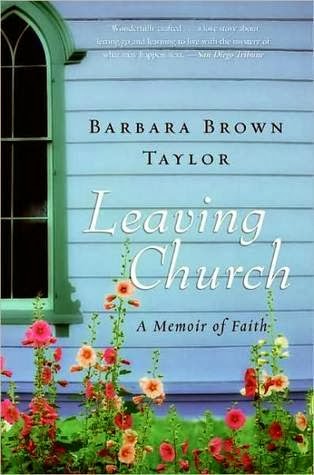
Leaving Church: A Memoir of Faith ~ by Barbara Brown Taylor

Leaving Church: A Memoir of Faith ~ by Barbara Brown Taylor, 2006

Baylor University named Barbara Brown Taylor one of the twelve most effective preachers in the English-speaking world. After ordination in the Episcopal Church, she served as a priest for two decades, and now she teaches religion at Piedmont College and is an adjunct professor of Christian spirituality at Columbia Theological Seminary. She is also a writer, having published more than ten books and now serving as editor-at-large and columnist for The Christian Century.

The title of this book may surprise many people who think "leaving church" means walking away from church.  Did she?  Yes, and no.   Yes, she put away her collar, left the church she was serving, and didn't go back.  Not going back is required of clergy in some denominations, like hers (Episcopal) and mine (United Methodist).  We don't go back because people would continue to go to her or me for the pastoral care we had been giving them.  But on the other hand, no, she did not leave God, which is what many think "leaving church" really means.

The book is divided into three parts:  Finding, Losing, and Keeping.  Taylor says the central revelation in her life is "that the call to serve God is first and last the call to be fully human" (p. xi).  In this book she explores what that has meant to her "in a world where religion often seems to do more harm than good" (p. xii).  She could see that "human beings never behave more badly toward one another than when they believe they are protecting God" (p. 106).

Taylor addresses the reason I don't usually tell people up front that I am an ordained minister when she says, "If being ordained meant being set apart from them [the people] then I did not want to be ordained anymore.  I wanted to be human" (p. 120).  Many pastors seem to enjoy being considered something special, but Taylor and I both see ourselves as one of the people.  I was especially interested to see that, after leaving her position as pastor of a church, she began to teach religions of the world.  While I was still pastor of my last church, I did the same thing.

This book will give you a look at what being a pastor is all about, the struggles as well as the joys, and "look[ing] at life through the windows of the church" in a context "so tightly focused that even my junk mail was Christian" (p. 168).   I rate the book 9/10, excellent.
__________
An opposing point of view:  http://jameskasmith.blogspot.com/2007/04/leaving-church-for-what.html